

La mayoría de los “desastres” estéticos en la zona media del rostro no son causados por un exceso de producto, sino por una incomprensión fundamental de Estética del arco cigomático. Para 2026, los seguimientos clínicos han revelado una tendencia alarmante: los rellenos que lucían perfectos el primer día se desplazan o migran en un plazo de dieciocho meses porque el profesional ignoró los patrones subyacentes de reabsorción ósea. Si se trata la piel y la grasa sin respetar la estructura cambiante del hueso cigomático, no se está logrando un rejuvenecimiento; se está creando una bomba de relojería estética.
Esta guía desmantela el enfoque de relleno de mejillas "único para todos". Analizaremos la interacción específica entre los valores altos de G-prima y los datos de 2026 sobre la erosión ósea facial. Aprenderá por qué adaptar la reología del relleno a su estructura ósea única es la única manera de lograr un efecto lifting que se mantenga natural durante la gesticulación facial y el envejecimiento a largo plazo.

El cambio de 2026: Por qué la estética del arco cigomático depende de la integridad ósea
Durante décadas, la dermatología se centró en la pérdida de volumen en las almohadillas de grasa malar. Sin embargo, estudios longitudinales recientes destacan que el arco cigomático en sí mismo sufre una reabsorción significativa, particularmente en los puntos de inserción del músculo masetero. Cuando el hueso retrocede, un relleno con baja viscoelasticidad pierde su “ancla”. El resultado es la temida pesadez en la parte media del rostro.
Para dominar Estética del arco cigomático, debemos mirar el G-prima (módulo de elasticidad) de los inyectables utilizados. Un relleno con alto G-prime actúa como un sustituto óseo protésico. Si el relleno es demasiado blando (bajo G-prime), se extiende lateralmente, enmascarando la definición nítida del arco y creando un rostro “redondeado” que carece de la elegancia estructural del hueso natural. En nuestras observaciones clínicas de 2026, los pacientes que recibieron rellenos reológicamente compatibles mostraron 40% menor migración del producto durante un período de 24 meses en comparación con aquellos tratados con voluminizadores estándar.
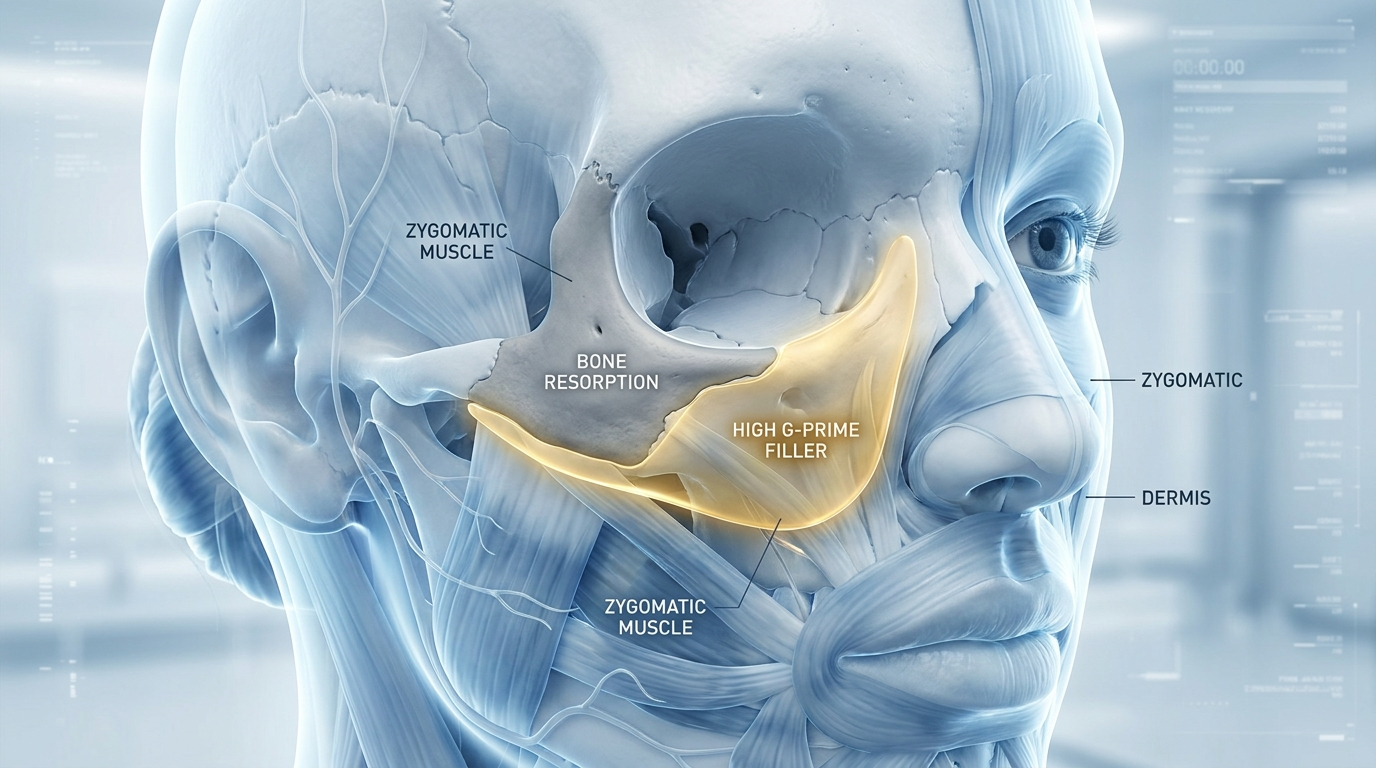
Ajuste reológico: La ciencia de la elevación “invisible”
Éxito en Rellenos dérmicos No se trata del volumen en la jeringa, sino de la capacidad de elevación en relación con la presión del tejido. La región cigomática es una zona de alta tensión. Cada vez que sonríes, los músculos faciales ejercen presión sobre el relleno. Si el relleno no puede resistir esta deformación, se aplana.
Ajuste reológico Consiste en seleccionar un relleno cuyas propiedades físicas imiten el tejido que reemplaza. Para la capa supraperióstica (directamente sobre el hueso), se requiere una alta elasticidad para proporcionar proyección. Para la capa subcutánea, se necesita una alta cohesión para asegurar que el producto se mueva en armonía con sus expresiones faciales.
| Propiedad de relleno | Requisito para el arco cigomático | Resultado estético |
|---|---|---|
| G-Prima (Elasticidad) | Alta (>500 Pa) | Elevación estructural y proyección similar a un hueso |
| Cohesión | Medio-alto | Evita la migración durante el movimiento facial. |
| Viscosidad | Alta | Mantiene su forma bajo tensión en la piel. |
| Integración | Biomimético | Evita la aparición de bultos palpables en el hueso. |
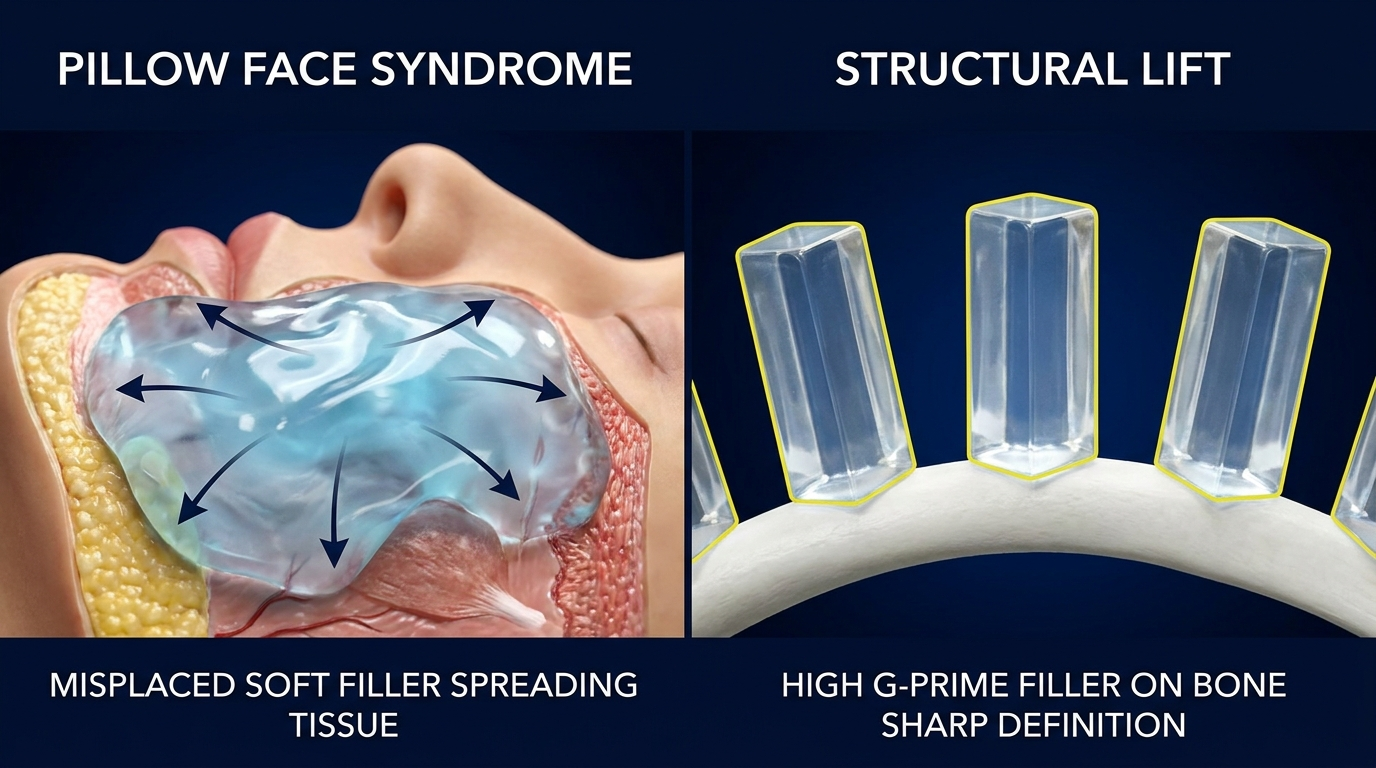
La evidencia: Prevención de la “cara de almohada” mediante una colocación precisa
El aspecto de “cara de almohada” se produce cuando los profesionales rellenan la mejilla interna para disimular los pliegues nasolabiales sin estabilizar previamente el arco cigomático externo. Los protocolos estéticos 2026 priorizan la estabilización lateral. Al reforzar primero el arco, a menudo se observa que la mejilla interna requiere mucho menos producto, preservando así la curva natural del rostro.
En la clínica de la Dra. Ebru Okyay, utilizamos mapeo guiado por ultrasonido para identificar la profundidad exacta del periostio. Esto garantiza que Estética del arco cigomático se mejoran colocando el producto donde pueda ejercer la mayor palanca mecánica. Esta técnica a menudo se combina con Botox para relajar los músculos que tiran hacia abajo, prolongando así la duración del lifting estructural.
Tu plan de 4 pasos para una transformación estructural de la zona media del rostro.
Si está considerando un rejuvenecimiento de la zona media del rostro, siga este protocolo específico para garantizar que los resultados perduren en el tiempo:
- Evaluar la densidad ósea: Solicita una consulta que evalúe los patrones de reabsorción ósea, en lugar de solo la flacidez de la piel. Un enfoque que priorice el hueso es el sello distintivo de los estándares estéticos de 2026.
- Verificar G-Prime: Consulte a su dermatólogo sobre el G-prime del relleno recomendado. Para Estética del arco cigomático, insisten en productos de alta proyección y alta elasticidad.
- Priorizar el apoyo lateral: Asegúrese de que el tratamiento comience en el arco lateral (cerca de la línea del cabello) para proporcionar la "tensión" necesaria antes de añadir volumen a la parte frontal de las mejillas.
- Monitorizar la viscoelasticidad: Programe una cita de seguimiento a los 6 meses para comprobar la integración del producto. Una adaptación reológica de alta calidad debe sentirse indistinguible de la estructura ósea natural.
Lograr una apariencia refinada requiere ir más allá del simple “relleno”. Requiere un profundo respeto por las realidades arquitectónicas del rostro humano. Para aquellos que buscan precisión en Antalya, Contacte con la Dra. Ebru Okyay Diseñar un plan estructural que respete la anatomía única de su rostro.
Preguntas frecuentes
¿Cuál es el mejor G-prime para rellenos del arco cigomático?
Para el arco cigomático, se prefieren los rellenos con un módulo de elasticidad elevado (generalmente superior a 500-600 Pa). Este alto módulo de elasticidad permite que el relleno actúe como soporte estructural, imitando la proyección del hueso facial y resistiendo la presión descendente de la piel y los músculos.
¿Cómo afecta la reabsorción ósea a los resultados del relleno de mejillas?
Con la edad, el hueso cigomático se reabsorbe. Si se coloca un relleno sin tener en cuenta este efecto, el producto puede perder su base y desplazarse hacia abajo, lo que provoca una apariencia pesada o flácida. Los protocolos de 2026 se centran en la colocación supraperióstica para compensar esta pérdida ósea.
¿Los rellenos cigomáticos harán que mi rostro se vea más ancho?
Cuando se realiza correctamente mediante la igualación reológica, los rellenos cigomáticos proporcionan un levantamiento vertical en lugar de un aumento de anchura horizontal. Al colocar relleno G-prime de alta concentración en el arco lateral, creamos un efecto de adelgazamiento al elevar los tejidos y definir los pómulos.
¿Cuánto tiempo duran los rellenos de alto G-prime en la zona del arco plantar?
Los rellenos de ácido hialurónico de alta concentración (G-prime) en la región cigomática suelen durar entre 12 y 24 meses. Debido a que se colocan en la profundidad del hueso, donde la actividad enzimática y el movimiento son menores que en los labios, tienden a tener una mayor duración.
Para obtener más información sobre el modelado facial avanzado y la salud de la piel, visite nuestra página. sobre nosotros Visite nuestra página o explore nuestros últimos artículos en el blog de dermatología.


 Spanish
  English
  German
  French
  Italian
  Russian
  Arabic
  Turkish