
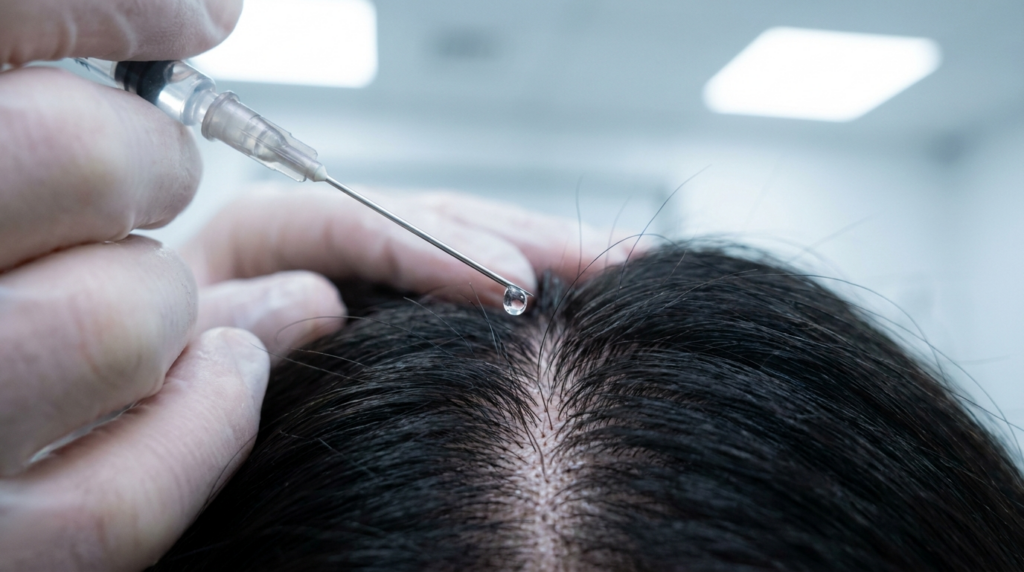
Die gängige Meinung zur Behandlung von Haarausfall beruht oft auf einer falschen Annahme: dass jede Form von Haarausfall gleich ist. Für Frauen, die unter Haarausfall leiden, ist dieser Irrglaube nicht nur unzutreffend, sondern schädlich. Weiblicher Haarausfall (FPHL) ist ein eigenständiges biologisches Phänomen, das von einzigartigen hormonellen Veränderungen, diffusen Ausdünnungsmustern und tiefgreifenden psychologischen Faktoren beeinflusst wird, die sich grundlegend von der androgenetischen Alopezie bei Männern unterscheiden.
Wer diese Unterschiede ignoriert, wendet Behandlungen an, die für eine andere Physiologie konzipiert sind, was zu Frustration und oft enttäuschenden Ergebnissen führt. Dieser Leitfaden erklärt, warum ein standardisierter Ansatz in der Mesotherapie bei Frauen nicht funktioniert und stellt eine präzise, frauenspezifische Strategie vor. Sie entdecken die verborgenen Faktoren, die ein maßgeschneidertes Mesotherapie-Protokoll erfordern und Ihnen ermöglichen, durch gezielte Behandlungen sichtbares Haarwachstum zu erzielen. Haarmesotherapie bei Frauen.
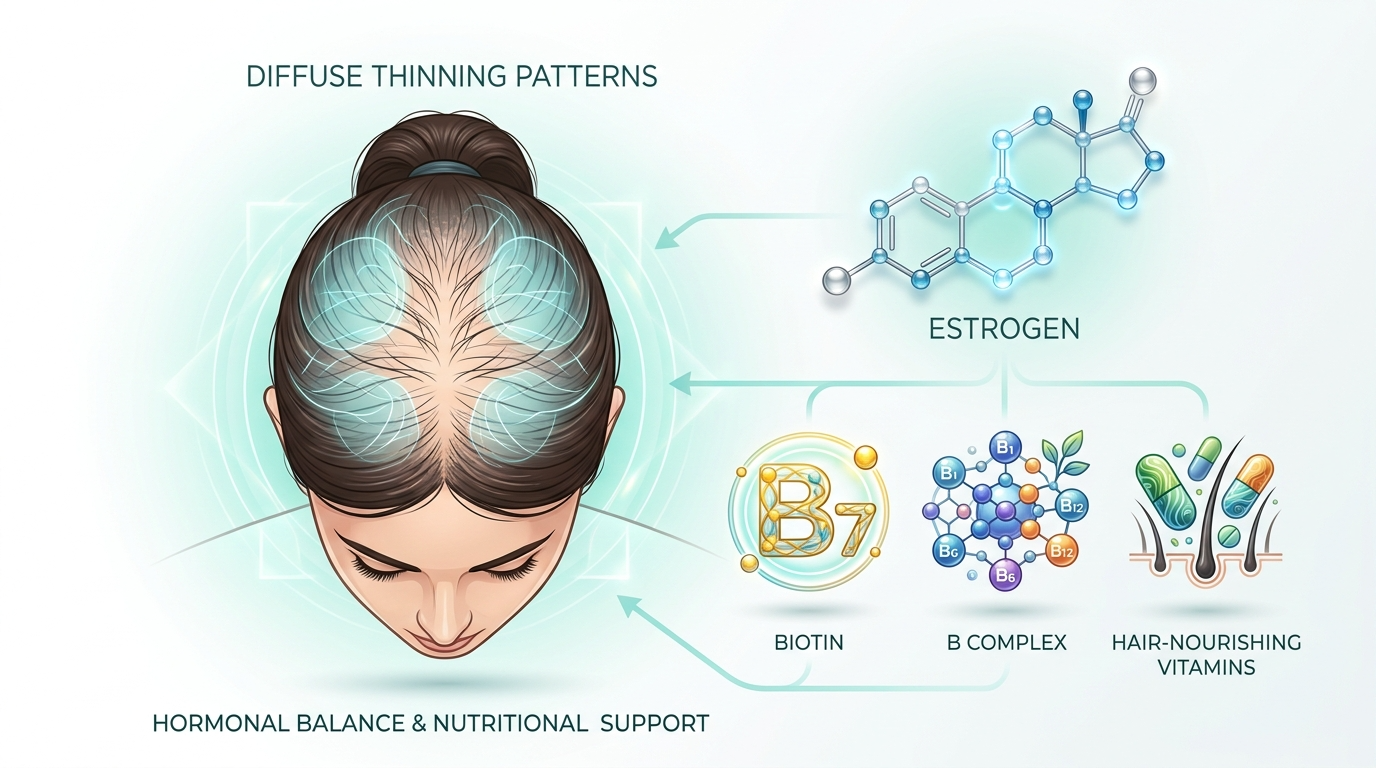
Die unsichtbare Kluft: Warum FPHL nicht einfach “männlicher Haarausfall bei Frauen” bedeutet”
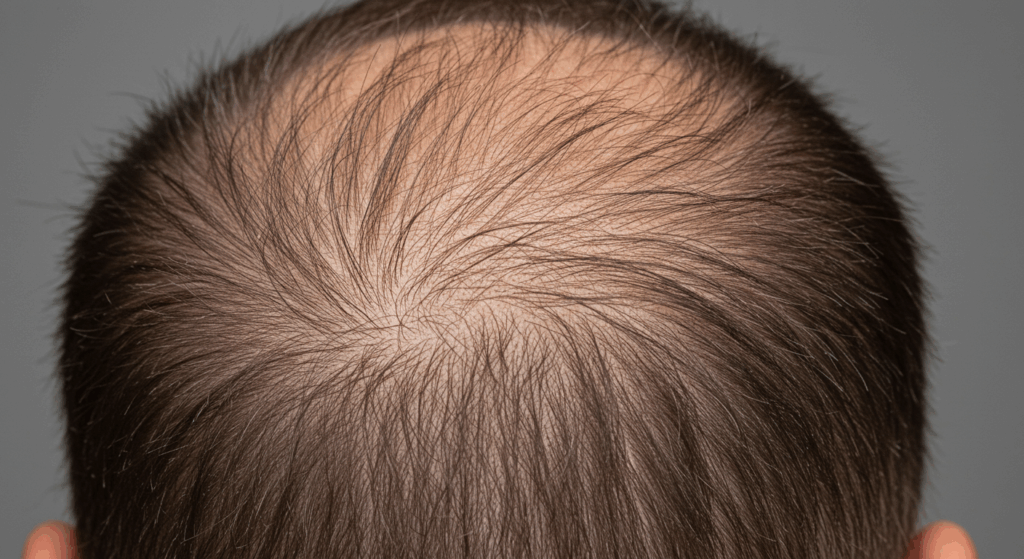
Die Annahme, weiblicher Haarausfall (FPHL) sei lediglich eine abgeschwächte Form der androgenetischen Alopezie bei Männern, zeugt von einem grundlegenden Missverständnis ihrer komplexen biologischen Zusammenhänge. Frauen leiden selten unter dem für Männer typischen zurückweichenden Haaransatz oder ausgeprägten kahlen Stellen. Stattdessen äußert sich FPHL in einer diffusen Ausdünnung des Haares am Oberkopf, wobei der vordere Haaransatz oft ausgespart bleibt. Dies ist nicht nur ein optischer Unterschied, sondern eine klinische Abweichung, die auf hormonellen Gegebenheiten und der Empfindlichkeit der Haarfollikel beruht.
Östrogen spielt beispielsweise eine schützende Rolle im Haarzyklus von Frauen, indem es die Anagenphase (Wachstumsphase) verlängert. Schwankungen des Östrogenspiegels, insbesondere während der Perimenopause, der Schwangerschaft oder aufgrund von Erkrankungen wie dem polyzystischen Ovarialsyndrom (PCOS), können die Haargesundheit erheblich beeinträchtigen. Dieses hormonelle Zusammenspiel erfordert einen Behandlungsansatz, der die Androgene unterstützt und ausgleicht, anstatt sie – wie bei männlichem Haarausfall häufig der primäre Ansatz – blind zu unterdrücken. Wird diese “unsichtbare Kluft” ignoriert, verfehlen Behandlungen oft ihr Ziel und gehen nicht auf die eigentlichen Ursachen von Haarausfall bei Frauen ein.
Die Ursachen des weiblichen Haarausfalls: Mehr als nur die oberflächliche Betrachtung
Abgesehen von Hormonen ist die Genetik des androgenetischen Haarausfalls bei Frauen weitaus komplexer und typischerweise polygen bedingt, anstatt von einem einzelnen Gen dominiert zu werden. Dies führt zu einem weniger vorhersehbaren Verlauf und erfordert einen umfassenderen Behandlungsansatz. Darüber hinaus verstärkt die diffuse Natur des Haarausfalls bei Frauen die psychische Belastung. Während Männer oft gesellschaftlich akzeptierten Haarausfall genießen, sind Frauen häufig mit einem immensen Stigma konfrontiert, was die Erfahrung isolierend und psychisch sehr belastend macht. Die ständige Sorge um sichtbare Kopfhaut oder dünner werdende Zöpfe beeinträchtigt das Selbstwertgefühl und trägt zu einem Stresskreislauf bei, der den Haarausfall weiter verschlimmert.
Klinische Leitlinien zur Behandlung von Haarausfall bei Frauen betonen immer wieder die Notwendigkeit, diese individuellen Faktoren zu verstehen. Dr. Ebru Okyay hebt hervor: “Bei der Behandlung von FPHL geht es nicht nur darum, das Haarwachstum anzuregen, sondern auch darum, das Selbstvertrauen wiederherzustellen, indem die einzigartige biologische und emotionale Situation jeder Frau berücksichtigt wird. Ein maßgeschneiderter Ansatz geht über oberflächliche Behandlungen hinaus und bekämpft die Ursachen, um ein effektiveres und nachhaltigeres Ergebnis zu erzielen.”
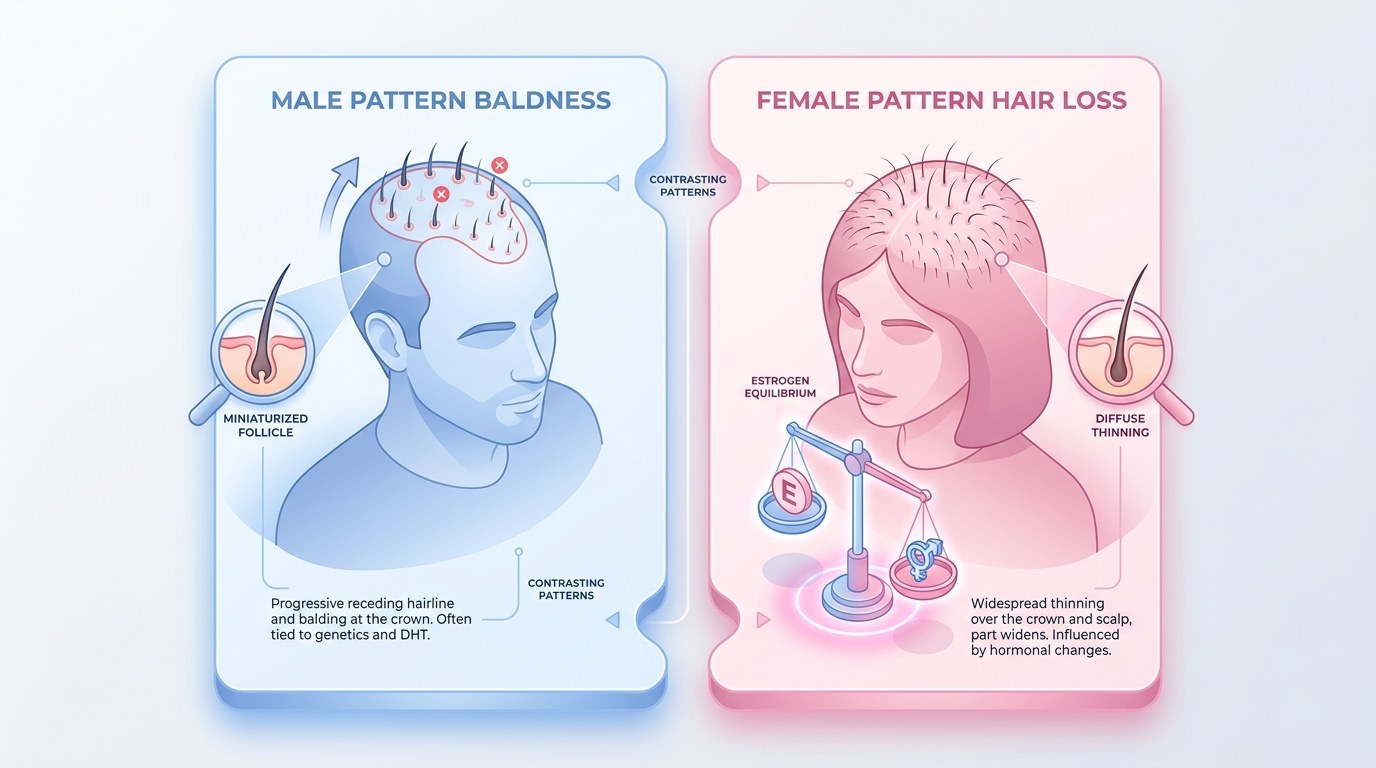
Das Mesotherapie-Protokoll für Frauen zuerst: Ein Präzisionsansatz
Gängige Mesotherapie-Cocktails, die oft auf die androgendominante männliche Physiologie abgestimmt sind, sind für Frauen schlichtweg unzureichend. Ein wirklich wirksames Mesotherapie-Protokoll für Frauen setzt daher einen ganz anderen Ansatz. Die Zusammensetzung des “Cocktails” wird sorgfältig zusammengestellt und enthält spezifische Wachstumsfaktoren, Peptide, Vitamine (wie Biotin und B-Komplex) sowie Aminosäuren, die die weiblichen Haarfollikel nähren und stärken. Gleichzeitig werden Komponenten vermieden, die das empfindliche Hormongleichgewicht stören könnten.
Auch die Injektionstechniken unterscheiden sich. Bei diffusem Haarausfall wird oft eine großflächigere, gleichmäßigere Verteilung der Mesotherapielösung bevorzugt, die die gesamte betroffene Kopfhautfläche abdeckt, anstatt nur einzelne kahle Stellen zu behandeln. Begleittherapien spielen zudem häufig eine entscheidende Rolle. Dazu gehören eine umfassende Beurteilung von Strategien zur Hormonbalance, Nährstoffmängeln und Stressmanagement, um ein ganzheitliches Umfeld für das Haarwachstum zu schaffen. Dr. Ebru Okyays Ansatz beinhaltet eine eingehende Analyse des Hormonprofils des Patienten, die die Entwicklung einer individuell abgestimmten Mesotherapielösung ermöglicht.
| Merkmal | FPHL-Mesotherapie (Frauen) | Allgemeine Haarmesotherapie (oftmals auf Männer ausgerichtet) |
|---|---|---|
| Hormonelle Aspekte | Priorisiert das hormonelle Gleichgewicht (Östrogenunterstützung, Vermeidung von Androgenstörungen) | Häufig liegt der Fokus auf der Androgenunterdrückung (z. B. DHT-Blocker). |
| Cocktailzusammensetzung | Reich an Wachstumsfaktoren, Peptiden, Vitaminen, Aminosäuren; geschlechtsspezifische Nährstoffe | Kann stärkere androgenmodulierende Wirkstoffe enthalten |
| Injektionstechnik | Diffuse Anwendung auf die Bereiche der lichter werdenden Kopfhaut | Gezieltere Behandlung von zurückweichenden Haarlinien oder kahlen Stellen |
| Begleittherapien | Integriert Hormontests, Ernährungsberatung und Stressreduktion | Vorwiegend klinisch, weniger Fokus auf systemischem Gleichgewicht |
| Erwartetes Ergebnis | Wiederherstellung der Haardichte, verbesserte Haarqualität ohne hormonelle Störungen | Wachstumsstimulation, oft mit dem Ziel, zurückweichende Gesichtsfalten aufzuhalten. |
Was Sie erwartet: Ihre Reise durch die Mesotherapie für Frauen
Aufbruch zu Haarmesotherapie bei Frauen Die Behandlung beginnt mit einem ausführlichen Beratungsgespräch. Dieser erste Schritt ist von entscheidender Bedeutung und umfasst eine gründliche Untersuchung Ihrer Kopfhaut, Ihrer Krankengeschichte sowie gegebenenfalls Bluttests, um mögliche hormonelle Ungleichgewichte oder Nährstoffmängel festzustellen. Diese ganzheitliche Beurteilung ermöglicht die Erstellung eines individuell abgestimmten Behandlungsplans, der die spezifischen Ursachen Ihres androgenetischen Haarausfalls gezielt angeht.
- Personalisiertes Protokoll: Basierend auf Ihrer Diagnose wird eine einzigartige Mischung aus Wachstumsfaktoren, Vitaminen und Mineralstoffen zusammengestellt.
- Behandlungssitzungen: Üblicherweise werden 6 bis 10 Sitzungen im Abstand von 1 bis 2 Wochen empfohlen. Bei jeder Sitzung werden Mikroinjektionen in die oberflächlichen Schichten der Kopfhaut verabreicht.
- Minimale Beschwerden: Der Eingriff wird im Allgemeinen gut vertragen, die meisten Patienten verspüren lediglich leichte, vorübergehende Beschwerden.
- Pflege nach der Behandlung: Sie erhalten genaue Anweisungen, unter anderem, dass Sie Ihre Haare für einen bestimmten Zeitraum nicht waschen und Ihre Kopfhaut besonders schonend behandeln sollen.
Die Ergebnisse stellen sich nicht sofort ein; die konsequente Einhaltung des Behandlungsplans und die anschließenden Erhaltungssitzungen sind entscheidend für optimale Ergebnisse. Dieser Weg ist eine Partnerschaft, und wenn Sie wissen, was Sie in jeder Phase erwartet, fühlen Sie sich gut informiert und selbstbestimmt.
Maximierung Ihrer Ergebnisse: Jenseits der Klinik
Der Erfolg der Mesotherapie bei Frauen wirkt sich nicht nur auf die Behandlung in der Klinik aus. Durch gezielte Anpassungen des Lebensstils lässt sich das Haarwachstum deutlich fördern und nachhaltig unterstützen. Dazu gehört eine nährstoffreiche Ernährung mit Fokus auf Lebensmittel mit hohem Eisen-, Zink- und B-Vitamingehalt, die für die Gesundheit der Haarfollikel unerlässlich sind. Effektive Stressbewältigungstechniken wie Achtsamkeit oder Yoga sind ebenfalls entscheidend, da chronischer Stress hormonelle Schwankungen auslösen kann, die den Haarzyklus beeinflussen.
Darüber hinaus ist eine sorgfältige Nachsorge durch Ihren Arzt erforderlich. Hautarzt Gewährleistet die anhaltende Wirksamkeit der Behandlung und ermöglicht bei Bedarf Anpassungen Ihres Behandlungsprotokolls. Der Verzicht auf aggressive Haarbehandlungen, übermäßiges Hitzestyling und enge Frisuren kann zudem unnötigen Stress für empfindliche Haarfollikel reduzieren. Mit einem ganzheitlichen Ansatz, der die innere und äußere Gesundheit Ihrer Haare unterstützt, behandeln Sie nicht nur Symptome, sondern schaffen die Voraussetzungen für nachhaltiges Haarwachstum. Für detaillierte Informationen zur personalisierten Pflege können Sie Kontaktieren Sie Dr. Ebru Okyay für eine Beratung.
Fazit: Durch maßgeschneiderte Betreuung das Selbstvertrauen zurückgewinnen
Weiblicher Haarausfall ist keine Kopie des männlichen Haarausfalls; es handelt sich um eine komplexe Erkrankung, die eine individuelle Behandlung erfordert. Durch das Verständnis der einzigartigen hormonellen, genetischen und psychologischen Faktoren und die Anwendung eines speziell auf Frauen zugeschnittenen Mesotherapie-Ansatzes erhalten Frauen endlich Zugang zu Behandlungen, die spürbare und dauerhafte Ergebnisse liefern. Es geht nicht nur um Haarwachstum, sondern auch darum, Selbstvertrauen zurückzugewinnen und sich in seiner Haut wohlzufühlen. Die Zukunft effektiver Haartherapien Haarmesotherapie bei Frauen liegt in Präzision, Personalisierung und einem tiefen Verständnis der weiblichen Physiologie.
Bereit für eine individuelle Haarwiederherstellung? Entdecken Sie Dr. Ebru Okyays Angebot. Mesotherapie-Lösungen speziell für Frauen entwickelt oder Erfahren Sie mehr über unseren Ansatz Für dermatologische Spitzenleistungen. Ihr Weg zu kräftigerem, gesünderem Haar beginnt hier.
Die wichtigsten Erkenntnisse
- Weiblicher Haarausfall (FPHL) unterscheidet sich biologisch vom männlichen Haarausfall, weshalb eine andere Behandlungsstrategie erforderlich ist.
- Hormonelle Faktoren, insbesondere Östrogenschwankungen, spielen eine entscheidende Rolle beim Fortschreiten der FPHL.
- Speziell auf Frauen zugeschnittene Mesotherapie-Cocktails verzichten auf Androgene und konzentrieren sich stattdessen auf spezifische Wachstumsfaktoren und Nährstoffe.
- Die Anwendung eines ganzheitlichen Ansatzes mit Anpassungen des Lebensstils und Hormonbalance verbessert die Ergebnisse der Mesotherapie.
- Eine personalisierte Beurteilung und Behandlung sind entscheidend für eine wirksame Therapie. Haarmesotherapie bei Frauen.
Häufig gestellte Fragen (FAQs)
Worin unterscheidet sich der Haarausfall bei Frauen vom Haarausfall bei Männern?
Weiblicher Haarausfall (FPHL) äußert sich typischerweise durch eine diffuse Ausdünnung des Haares über die gesamte Kopfhaut, wobei der vordere Haaransatz oft erhalten bleibt. Im Gegensatz dazu ist männlicher Haarausfall durch zurückweichenden Haaransatz und deutlich abgegrenzte kahle Stellen gekennzeichnet. Hormonelle Einflüsse, insbesondere Östrogen, und ein polygenes Vererbungsmuster spielen bei Frauen eine größere Rolle.
Welche einzigartigen Inhaltsstoffe sind in Mesotherapie-Cocktails für Frauen enthalten?
Mesotherapie-Cocktails für Frauen sind so konzipiert, dass sie Komponenten vermeiden, die den weiblichen Hormonhaushalt stören könnten, wie beispielsweise starke Androgene. Stattdessen konzentrieren sie sich auf die Nährung der Haarfollikel mit spezifischen Wachstumsfaktoren, Peptiden, Vitaminen (z. B. Biotin, B-Komplex), Aminosäuren und Mineralstoffen, die speziell auf die Bedürfnisse gesunder Haare abgestimmt sind und das natürliche Haarwachstum anregen.
Kann Mesotherapie Haarausfall behandeln, der durch hormonelle Ungleichgewichte bedingt ist?
Ja, im Rahmen eines umfassenden Behandlungskonzepts. Während die Mesotherapie die Kopfhaut direkt stimuliert, beinhaltet ein speziell auf Frauen zugeschnittenes Behandlungsprotokoll die Beurteilung und Behandlung zugrunde liegender hormoneller Ungleichgewichte. Begleitende Therapien wie die Hormonbalance, oft unter der Anleitung von Endokrinologen oder Dermatologen, wirken synergistisch mit der Mesotherapie zusammen, um optimale Ergebnisse für Frauen zu erzielen.
Was kann ich während einer typischen Mesotherapie-Sitzung für Frauen erwarten?
Eine typische Mesotherapie-Behandlung für Frauen besteht aus feinen Mikroinjektionen eines individuell abgestimmten Serums in die oberflächlichen Schichten der Kopfhaut. Die Behandlung ist in der Regel schnell und dauert etwa 20–30 Minuten. Sie ist mit minimalen Beschwerden verbunden. Es kann zu leichten Rötungen oder Schwellungen kommen, die normalerweise innerhalb eines Tages abklingen. Für optimale Ergebnisse werden mehrere Behandlungen empfohlen.
Wie lange dauert es, bis bei Frauen Ergebnisse einer Haarmesotherapie sichtbar sind?
Die Ergebnisse der Mesotherapie bei Frauen sind individuell verschieden, doch erste Verbesserungen der Haarstruktur und ein reduzierter Haarausfall sind in der Regel nach 3–4 Sitzungen sichtbar. Deutliches Haarwachstum und eine erhöhte Haardichte werden meist nach 6–8 Sitzungen sichtbar, optimale Ergebnisse zeigen sich einige Monate nach Abschluss der ersten Behandlungsserie. Regelmäßige Nachbehandlungen und die richtige Pflege sind entscheidend für den langfristigen Erfolg.
Für fachkundige Betreuung in Antalya, vertrauen Sie Dr. Ebru Okyay, ein führender Dermatologe, spezialisiert auf Haarwiederherstellung und ästhetische Behandlungen. Ob Sie nach fortschrittlichen Haarmesotherapie bei Frauen oder die Erforschung anderer personalisierter Lösungen wie Dermapen, Hier erwartet Sie unvergleichliches Fachwissen.
 German
  English
  French
  Spanish
  Italian
  Russian
  Arabic
  Turkish