
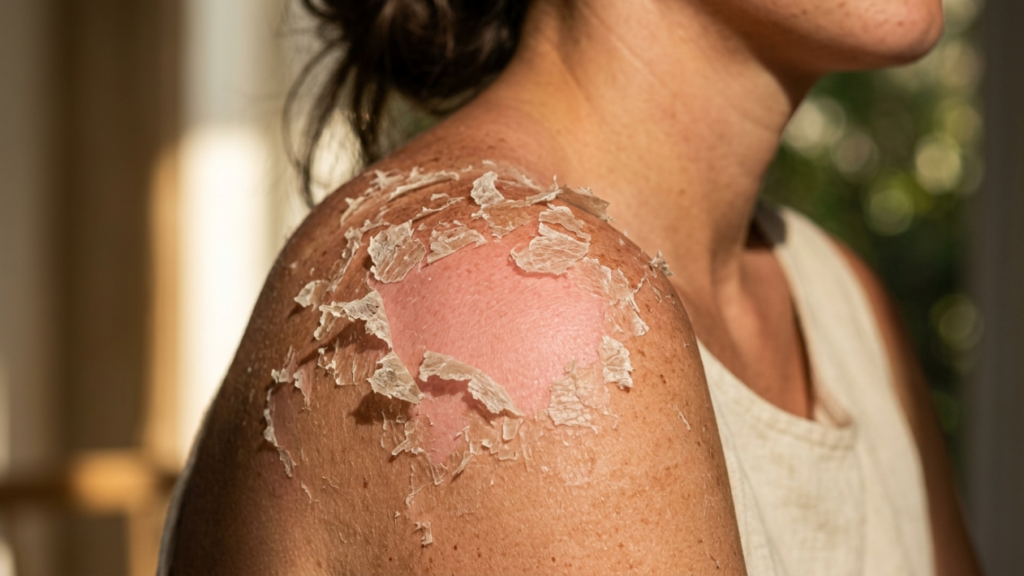
Imagine your skin as a silent architect, constantly rebuilding itself while you sleep, work, or even scroll through this article. Every minute, you lose **30,000 to 40,000 dead skin cells**—a process so seamless you never notice it. But what if this invisible cycle suddenly becomes visible?
What if your skin starts flaking like autumn leaves, or worse, refuses to shed at all? This isn’t just about dryness or aesthetics—it’s about **desquamation**, the biological masterpiece that keeps your skin barrier intact, your immune system alert, and your body in harmony with the world. When this process falters, the consequences range from stubborn dandruff to chronic conditions like psoriasis or eczema. The good news? Understanding desquamation gives you the power to **hack your skin’s renewal cycle**—naturally, effectively, and backed by cutting-edge dermatological science.
This 2026 guide dives deep into the **mechanisms, triggers, and hidden regulators** of desquamation, revealing how your skin’s outermost layer—the **stratum corneum**—orchestrates a ballet of cellular turnover. You’ll discover why this process is more than just “shedding” and how modern science is unlocking its potential to **reverse aging, heal wounds, and even combat infections**. Whether you’re battling flaky skin or simply curious about how your body renews itself, this is your roadmap to a healthier, more resilient complexion.
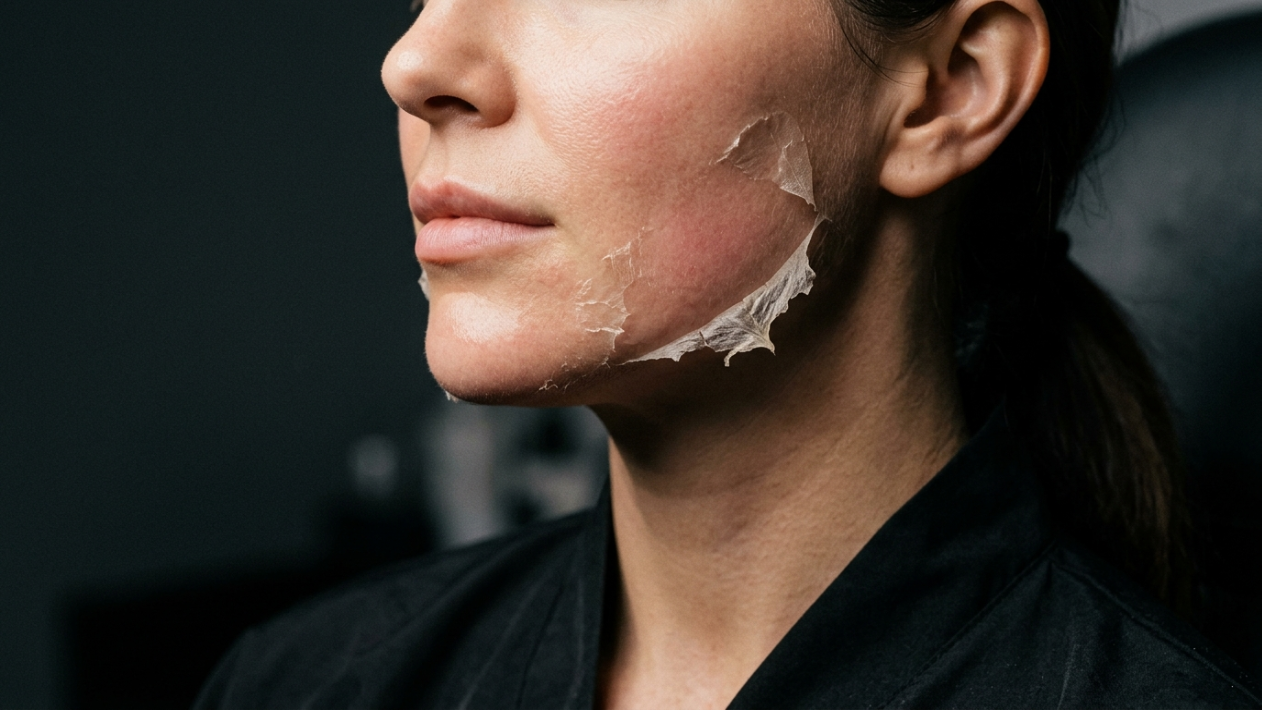
Desquamation Defined: The Invisible Engine of Skin Renewal
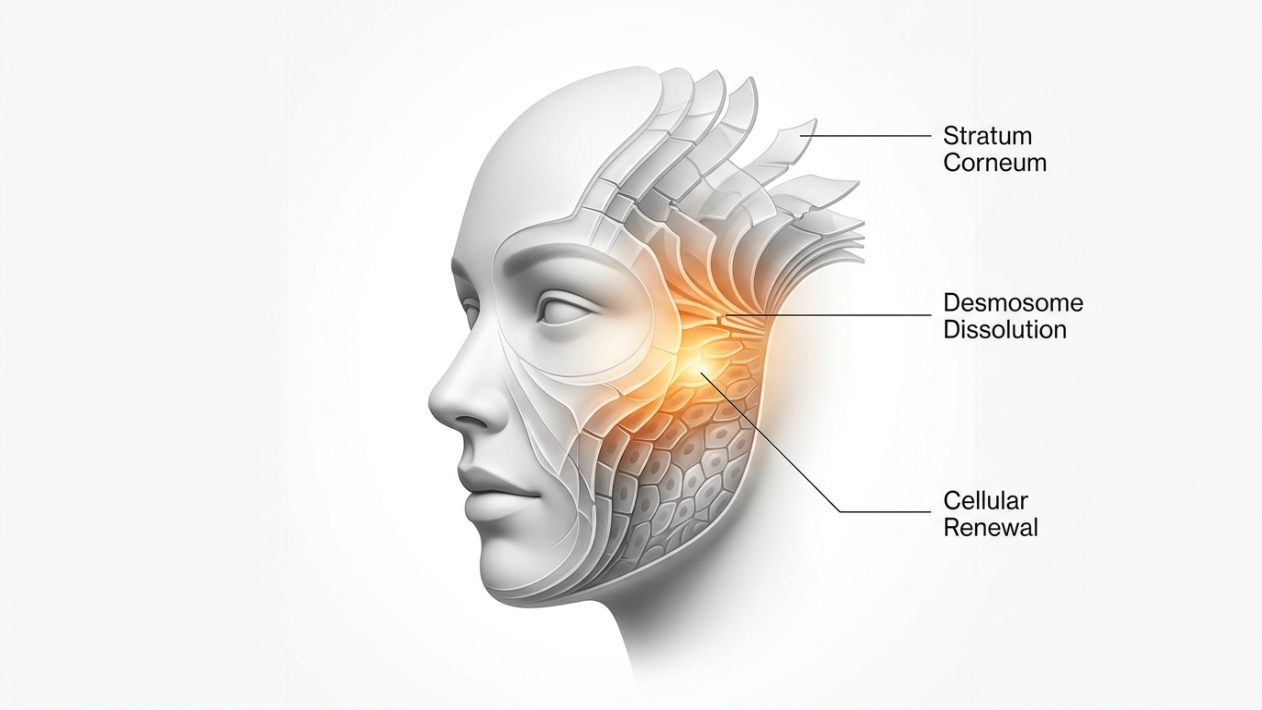
Desquamation is the **highly regulated shedding of corneocytes**—the dead, flattened cells that make up the **stratum corneum**, your skin’s outermost protective shield. Far from being a passive sloughing off, this process is a **biological symphony** conducted by enzymes, pH levels, and cellular signals. Here’s what makes it extraordinary:
- Precision Timing: Your stratum corneum renews itself every **20–30 days** in youth, slowing to **40–60 days** by age 50 (Age-associated changes in human epidermal cell renewal, 2025). This isn’t random—it’s governed by **keratinocyte turnover rates** and environmental cues like humidity and temperature.
- Enzymatic Mastery: The process hinges on **kallikrein-related peptidases (KLKs)**, a family of enzymes that degrade **corneodesmosomes**—the “glue” holding corneocytes together. Without KLKs, your skin would suffocate under layers of dead cells (Three stepwise pH progressions in stratum corneum, 2024).
- pH-Dependent: The stratum corneum’s acidic mantle (pH **4.5–5.5**) is critical. Even a slight pH shift can disrupt desquamation, leading to conditions like **atopic dermatitis** (Stratum corneum pH and ceramides, 2025).
Think of desquamation as your skin’s **quality control system**. When it works, you get a smooth, hydrated complexion. When it doesn’t, you face **flaking, clogged pores, or even infections**—because those dead cells aren’t just unsightly; they’re a buffet for bacteria.
The Stratum Corneum: Your Skin’s Armor and Its Renewal Cycle
The stratum corneum is often called the “brick-and-mortar” layer, where **corneocytes (bricks)** are embedded in a lipid matrix (mortar). But this static analogy misses its dynamic nature. Here’s how it really works:
| Layer | Role in Desquamation | Key Players |
|---|---|---|
| Stratum Basale | Birthplace of keratinocytes; stem cells divide here. | Keratin 5/14, integrins |
| Stratum Spinosum | Keratinocytes begin flattening; lipid production starts. | Loricrin, filaggrin |
| Stratum Granulosum | Cells lose nuclei, fill with keratin; **lamellar bodies** release lipids. | Keratin 1/10, ceramides |
| Stratum Corneum | Final shedding zone; corneodesmosomes degrade via KLKs. | KLK5, KLK7, corneodesmosin |
Keratinocytes, the workhorses of this system, undergo a **28-day journey** from birth in the stratum basale to shedding in the stratum corneum. Their transformation is nothing short of alchemy: they start as plump, living cells and end as flat, lipid-rich shields. The **lamellar bodies** they release in the stratum granulosum are packed with enzymes and lipids that **seal the skin barrier** and prime corneocytes for shedding (Epidermal lamellar bodies, 2025).
Keratinocytes: The Unsung Heroes of Skin Shedding
Keratinocytes don’t just passively slough off—they **actively orchestrate** desquamation. Recent research reveals their dual role:
- Enzyme Producers: Keratinocytes synthesize **KLK5 and KLK7**, the proteases that clip corneodesmosomes. Without these, corneocytes would cling indefinitely, leading to **hyperkeratosis** (thickened, scaly skin).
- pH Regulators: They maintain the stratum corneum’s acidic pH by producing **urocanic acid** and **lactic acid**, which activate KLKs. Disrupt this balance (e.g., with alkaline soaps), and desquamation stalls.
- Immune Sentinels: Keratinocytes release **cytokines (IL-1, TNF-α)** when they sense pathogens or UV damage, accelerating shedding to expel threats (Keratinocytes as active regulators, 2025).
A 2025 study in Frontiers in Immunology found that **stressed keratinocytes** (from pollution or lack of sleep) overproduce KLKs, leading to **premature desquamation**—the flaking you see after a sleepless night. Conversely, **aging keratinocytes** slow enzyme production, causing dull, rough skin.
When Desquamation Goes Wrong: Signs and Solutions
Desquamation disorders manifest in two extremes:
| Condition | Cause | Symptoms | Solutions |
|---|---|---|---|
| Hypodesquamation | Slow KLK activity (aging, dryness) | Dull skin, clogged pores, milia | AHAs (glycolic acid), retinol, hydrating ceramides |
| Hyperdesquamation | Overactive KLKs (eczema, psoriasis) | Flaking, redness, itching | pH-balanced cleansers, anti-inflammatory niacinamide |
| Dysregulated | pH imbalance (harsh products) | Tightness, sensitivity, peeling | Barrier-repair lipids (cholesterol, fatty acids) |
For example, **psoriasis** isn’t just “dry skin”—it’s a **KLK overdrive** where corneocytes shed in **4 days instead of 28**, leaving raw, inflamed skin. Meanwhile, **diabetes** can thicken the stratum corneum, impairing desquamation and wound healing (Dynamic multi-omics mechanisms, 2025).
How to Optimize Your Skin’s Shedding Cycle
Supporting healthy desquamation isn’t about scrubbing harder—it’s about **working with your skin’s biology**. Here’s your evidence-backed action plan:
- Preserve Your Acid Mantle: Use cleansers with a pH of **4.5–5.5** (e.g., lactic acid-based). Avoid alkaline soaps, which disrupt KLK activity.
- Feed Your Keratinocytes: Ceramides, cholesterol, and **omega-3 fatty acids** (found in fish oil) replenish the lipid matrix. Studies show topical ceramides reduce transepidermal water loss by **30%** (Enhancement of SC lipid structure, 2025).
- Gentle Exfoliation: **Polyhydroxy acids (PHAs)** like gluconolactone exfoliate without stripping lipids. Unlike AHAs, they don’t thin the stratum corneum.
- Hydrate Strategically: Glycerin and **hyaluronic acid** attract water to the stratum corneum, softening corneocytes for smoother shedding.
- Protect Your Barrier: Niacinamide (vitamin B3) boosts ceramide production and reduces KLK overactivity in conditions like rosacea.
For advanced concerns, treatments like **microneedling (Dermapen)** or **mesotherapy** can stimulate keratinocyte renewal. Always consult a dermatologist—like Dr. Ebru Okyay—to tailor solutions to your skin’s unique rhythm.
The Future of Desquamation: From Lab to Skin Care
Science is unlocking desquamation’s potential beyond aesthetics:
- Wound Healing: Researchers are designing **smart bandages** that mimic KLK activity to accelerate debris removal in chronic wounds (Biological and Molecular Mechanisms of Wound Healing, 2025).
- Anti-Aging: **Retinol alternatives** like bakuchiol are being studied for their ability to normalize keratinocyte turnover without irritation.
- Microbiome Synergy: Probiotics like Lactobacillus strains may modulate KLK production, offering a **gut-skin axis** approach to desquamation disorders.
As we decode the **epigenetic switches** controlling keratinocyte behavior, personalized skincare could soon adjust your desquamation cycle as precisely as a thermostat.
FAQs: Your Desquamation Questions Answered
Why does my skin peel more in winter?
Cold air and indoor heating reduce humidity, dehydrating the stratum corneum. This triggers **compensatory desquamation**—your skin sheds faster to prevent clogged pores, but without proper hydration, it leads to visible flaking. Use a humidifier and lipid-rich moisturizers to counteract this.
Can overexfoliation damage desquamation?
Yes. Overusing AHAs/BHAs or physical scrubs can strip the lipid barrier, causing **paradoxical hyperdesquamation**—your skin sheds erratically to repair damage. Limit exfoliation to 2–3 times weekly and always follow with ceramides.
How does aging affect desquamation?
Aging slows keratinocyte turnover and reduces KLK enzyme production. By 60, your stratum corneum renews **40% slower** than in your 20s, leading to rough texture and dullness. Retinoids and peptides can help restart cellular signaling.
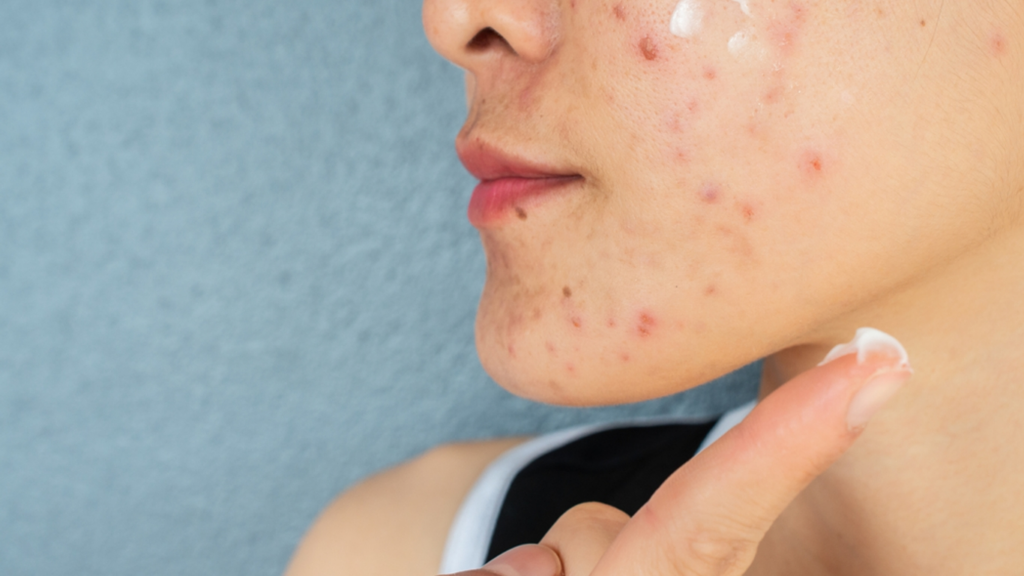
Is desquamation linked to acne?
Absolutely. Clogged pores often result from **hypodesquamation**—corneocytes stick together, trapping sebum and bacteria. Salicylic acid (a BHA) dissolves the “glue” between cells, normalizing shedding and preventing breakouts.
For personalized advice on optimizing your skin’s renewal cycle, explore anti-aging treatments or schedule a consultation with Dr. Ebru Okyay, a board-certified dermatologist specializing in epidermal barrier repair.

 English
  German
  French
  Spanish
  Italian
  Russian
  Arabic
  Turkish