
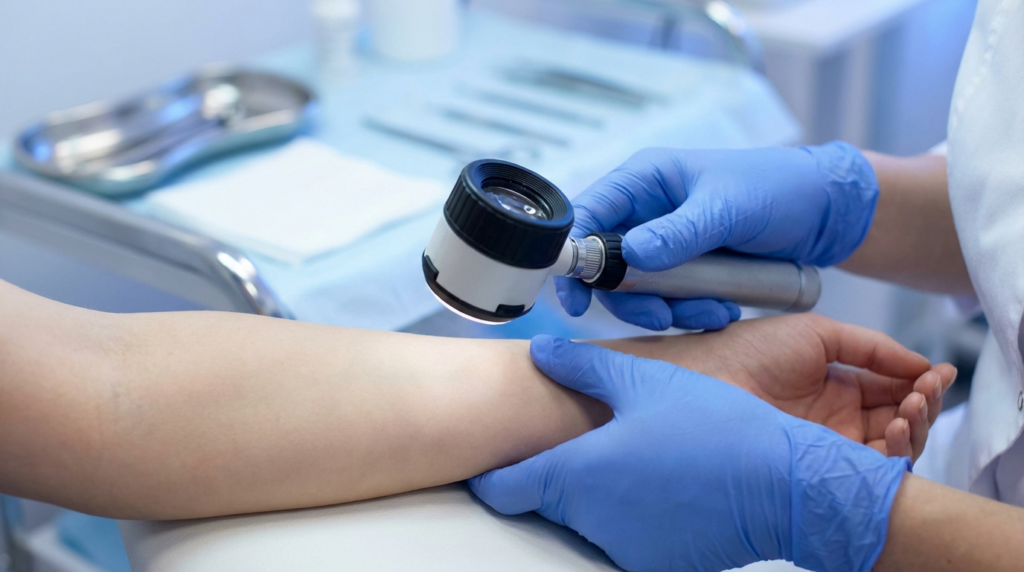
Nombreuses sont les personnes qui s'interrogent sur la complexité de la santé de la peau, souvent sans savoir vers qui se tourner pour obtenir des conseils d'experts. dermatologue, un médecin spécialisé dans la peau, les cheveux et les ongles, propose un diagnostic précis et un traitement efficace pour une multitude d'affections, assurant ainsi votre bien-être.
D’ici 2026, il sera primordial de comprendre le rôle essentiel de ces spécialistes. Ce guide met en lumière les fonctions essentielles d’un dermatologue, en détaillant les maladies courantes qu’il traite et en précisant quand une consultation chez ce spécialiste est nécessaire.

La mission première du dermatologue : au-delà des apparences.
L'expertise d'un dermatologue dépasse largement le cadre de l'esthétique. Ce sont des médecins formés pour diagnostiquer et traiter plus de 3 000 affections de la peau, des cheveux et des ongles. Cela inclut tout, des éruptions cutanées courantes aux cancers cutanés complexes, exigeant une connaissance approfondie de la physiologie humaine.
Leur rôle englobe les aspects médicaux et chirurgicaux de la dermatologie. Souvent, le dermatologue est le premier intervenant face à des maladies systémiques graves se manifestant sur la peau. Pour une prise en charge complète, il est toujours conseillé de consulter un spécialiste.
Pourquoi consulter un spécialiste de la peau est important
La peau, le plus grand organe du corps, constitue une barrière protectrice contre les agressions extérieures. Son état reflète directement le bien-être général. Un dermatologue possède les connaissances spécialisées nécessaires pour interpréter ces signaux et fournir des informations essentielles sur votre état de santé.
Le dépistage précoce des affections cutanées, notamment du cancer de la peau, améliore considérablement les résultats du traitement. Des consultations régulières chez un dermatologue constituent donc un élément essentiel de la prévention. Négliger les symptômes cutanés peut entraîner des complications plus graves.
7 maladies courantes traitées par un dermatologue
Les dermatologues sont confrontés quotidiennement à un large éventail d'affections, allant des maladies inflammatoires chroniques aux maladies infectieuses, chacune nécessitant une prise en charge personnalisée. La connaissance de ces diagnostics courants permet de mieux identifier les situations nécessitant l'intervention d'un dermatologue.
- Acné: L'acné, qui touche des millions de personnes, se caractérise par des pores obstrués, entraînant l'apparition de points noirs, de points blancs, de kystes et de nodules. Les traitements varient, allant des crèmes topiques aux médicaments oraux, et incluent souvent des thérapies plus avancées.
- Eczéma (dermatite atopique) : L'eczéma, caractérisé par des rougeurs, des démangeaisons et une inflammation de la peau, apparaît souvent dès l'enfance. La prise en charge repose sur l'hydratation, les médicaments anti-inflammatoires et l'identification des facteurs déclenchants.
- Psoriasis: Le psoriasis, une maladie auto-immune chronique, provoque un renouvellement rapide des cellules cutanées, ce qui entraîne la formation d'épaisses squames argentées et de plaques rouges. Les biothérapies et la photothérapie figurent parmi les traitements efficaces.
- Cancer de la peau : Le carcinome basocellulaire, le carcinome spinocellulaire et le mélanome sont les formes les plus fréquentes. Un dépistage précoce grâce à des examens cutanés réguliers est essentiel à la réussite du traitement.
- Rosacée: Cette affection cutanée inflammatoire chronique provoque des rougeurs au visage, des vaisseaux sanguins apparents et parfois des boutons. Il est essentiel d'identifier et d'éviter les facteurs déclenchants, en complément du traitement prescrit.
- Perte de cheveux (alopécie) : La chute des cheveux peut être causée par divers facteurs, notamment la génétique, les hormones et les maladies auto-immunes. Les dermatologues en déterminent le type et recommandent les traitements appropriés, allant des solutions topiques aux thérapies de pointe.
- Infections fongiques : Des affections comme le pied d'athlète, la teigne et les mycoses des ongles sont fréquentes. Les médicaments antifongiques, topiques et oraux, permettent de traiter efficacement ces infections persistantes.
Chaque affection exige une approche diagnostique précise et un plan de traitement personnalisé. L'expertise d'un dermatologue garantit une identification exacte et une prise en charge optimale de ces diverses pathologies.
Processus de diagnostic : percer les secrets de la peau
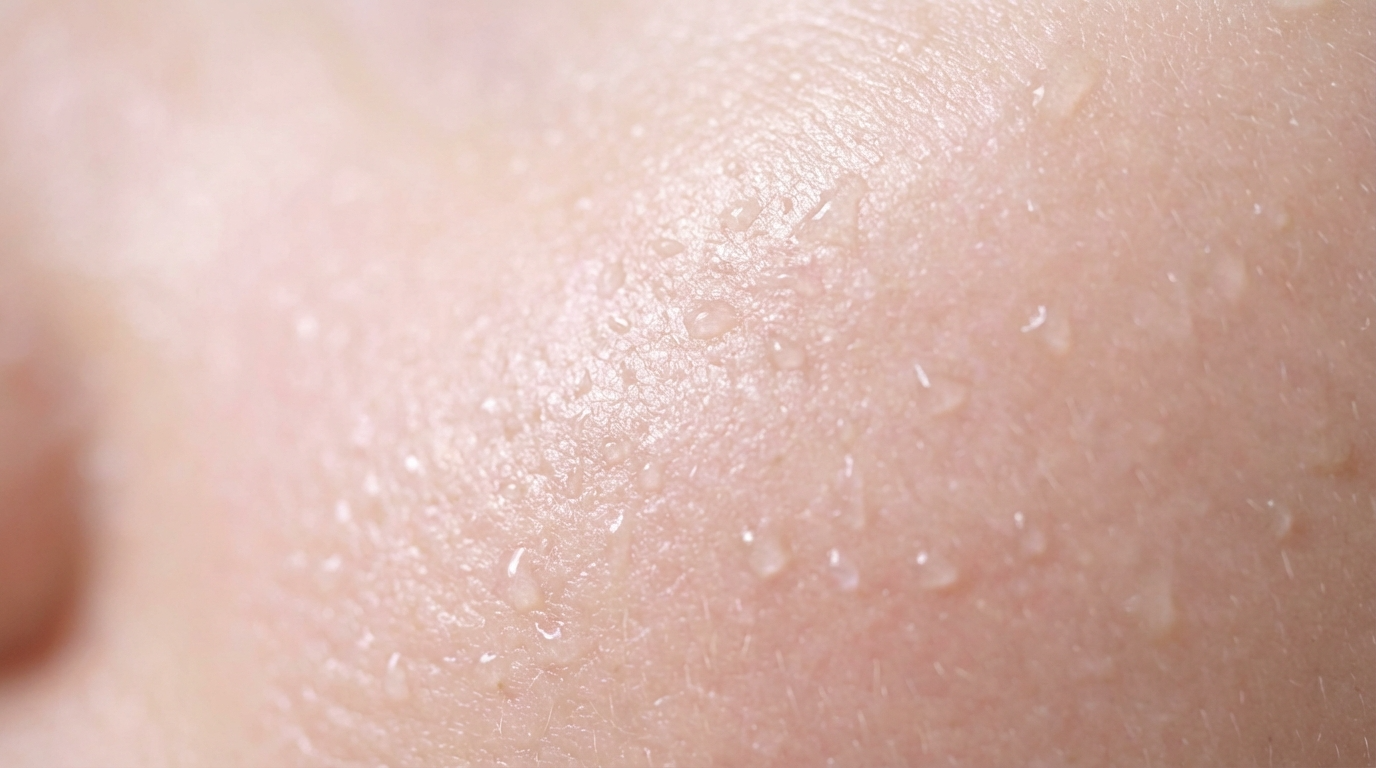
Un diagnostic précis est essentiel à l'efficacité des traitements dermatologiques. Les dermatologues utilisent diverses techniques sophistiquées pour identifier les affections de la peau, des cheveux et des ongles. Ces méthodes permettent de comprendre clairement la pathologie sous-jacente.
Outils de diagnostic clés
- Examen visuel : La première étape consiste en un examen approfondi de la peau, des cheveux et des ongles, souvent à l'aide d'un microscope.
- Dermoscopie : Cette technique non invasive utilise un dispositif de grossissement spécialisé pour examiner les lésions cutanées en détail, contribuant ainsi à la détection précoce du cancer de la peau.
- Biopsie de la peau : Un petit échantillon de tissu cutané est prélevé et examiné au microscope. Cela permet d'établir un diagnostic définitif pour de nombreuses affections, y compris le cancer.
- Tests épicutanés d'allergie : Identifie les allergènes spécifiques responsables de la dermatite de contact, ce qui est crucial pour la gestion des réactions allergiques.
- Examen de la lampe de Wood : Utilise la lumière ultraviolette pour mettre en évidence certaines infections cutanées ou modifications de la pigmentation, facilitant ainsi le diagnostic.
Ces procédures diagnostiques, réalisées avec précision, permettent au dermatologue d'élaborer la stratégie de traitement la plus appropriée et la plus efficace pour chaque patient. Sans elles, on a souvent recours à l'intuition.

Modalités de traitement : Restauration de la santé de la peau
Une fois le diagnostic établi, les dermatologues déploient un large éventail de traitements. Ceux-ci vont des applications topiques aux interventions chirurgicales et laser de pointe, tous visant à restaurer la santé de la peau et à améliorer la qualité de vie. Une approche personnalisée est toujours primordiale.
Options de traitement complètes
- Médicaments topiques : Les crèmes, les onguents et les lotions contenant des ingrédients actifs comme les corticostéroïdes, les rétinoïdes ou les antibiotiques sont couramment prescrits.
- Médicaments oraux : Les antibiotiques, les antifongiques, les antiviraux et les immunomodulateurs systémiques traitent les affections plus étendues ou plus graves.
- Cryothérapie : L'azote liquide congèle et détruit les cellules cutanées anormales, et est efficace contre les verrues, les kératoses actiniques et certains cancers de la peau.
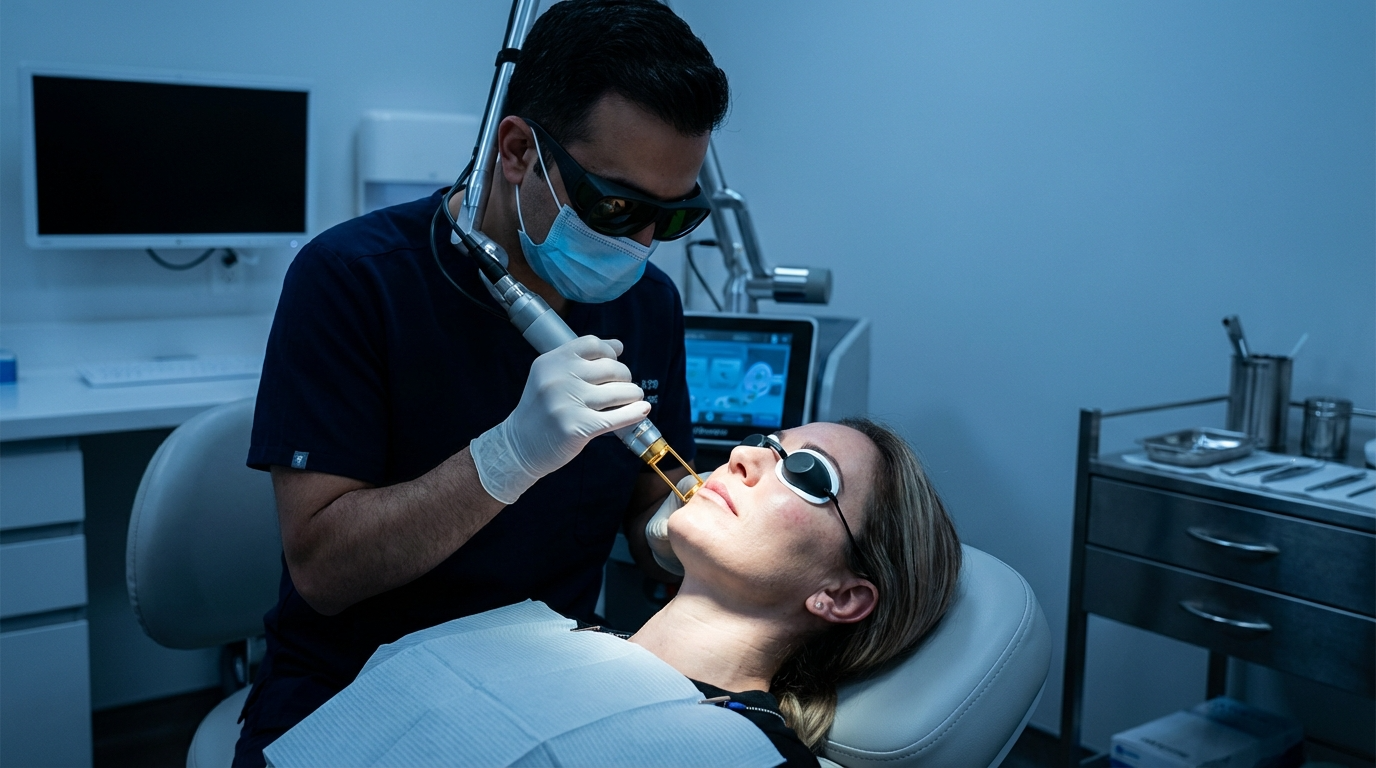
- Thérapie au laser : Utilisé à diverses fins, notamment l'épilation, la correction des cicatrices, la correction des taches pigmentaires et le traitement des lésions vasculaires. Pour un rajeunissement cutané avancé, explorez Solutions anti-âge.
- Excision chirurgicale : Elle permet d'éliminer les cancers de la peau, les excroissances bénignes et les kystes, intervention souvent réalisée en cabinet sous anesthésie locale.
- Photothérapie : L'exposition contrôlée aux rayons ultraviolets permet de traiter des affections comme le psoriasis, l'eczéma et le vitiligo.
Le choix du traitement dépend de l'affection, de sa gravité et de l'état de santé général du patient. Un dermatologue qualifié oriente ces choix avec expertise, garantissant ainsi des résultats optimaux.
Quand consulter un dermatologue : reconnaître les signes
Savoir quand consulter un dermatologue est essentiel pour éviter que des problèmes mineurs ne s'aggravent. Certains symptômes nécessitent une prise en charge immédiate, tandis que d'autres justifient un examen de routine. Votre peau exprime souvent clairement ses besoins.
Symptômes nécessitant une évaluation par un expert
- Éruptions cutanées persistantes : Toute éruption cutanée qui ne disparaît pas avec des médicaments sans ordonnance ou qui s'aggrave avec le temps.
- Changement d'aspect des grains de beauté ou des lésions : Les “ ABCDE ” du mélanome (asymétrie, irrégularité des bords, variation de couleur, diamètre supérieur à 6 mm, évolution) sont des indicateurs critiques.
- Acné sévère : Si l'acné est douloureuse, kystique ou laisse des cicatrices, une intervention professionnelle est nécessaire.
- Chute de cheveux inexpliquée : Une chute de cheveux importante ou soudaine justifie un examen diagnostique.
- Démangeaisons chroniques : Des démangeaisons persistantes sans cause évidente peuvent indiquer une affection cutanée sous-jacente ou un problème systémique.
- Modifications des ongles : Une décoloration, un épaississement ou un effritement des ongles peuvent signaler des infections fongiques ou d'autres troubles.
N’hésitez pas à consulter un spécialiste en cas de changement inquiétant de la peau, des cheveux ou des ongles. Une intervention précoce permet souvent des traitements plus simples et plus efficaces. Pour une consultation personnalisée, Contactez-nous aujourd'hui.

Conclusion
Le rôle du dermatologue est indispensable au maintien d'une bonne santé et d'un bien-être optimal. Du diagnostic des affections courantes comme l'acné et l'eczéma à la détection des cancers de la peau potentiellement mortels, son expertise protège et soigne la peau. Consulter un dermatologue, c'est prendre soin de sa santé.
Un examen cutané régulier et une prise en charge rapide des nouveaux symptômes sont essentiels. Consulter un dermatologue qualifié vous garantit un diagnostic précis et un traitement efficace. Votre peau mérite ce qu'il y a de mieux.
Points clés à retenir
- Les dermatologues sont des médecins spécialisés dans plus de 3 000 conditions affectant la peau, les cheveux et les ongles.
- Les affections courantes traitées comprennent acné, eczéma, psoriasis, cancer de la peau, rosacée, chute de cheveux et infections fongiques.
- Des outils de diagnostic comme dermoscopie et biopsies cutanées sont essentielles à une identification précise.
- Les options de traitement vont de des médicaments topiques et oraux à la thérapie laser et à la chirurgie.
- Consultez un dermatologue pour Éruptions cutanées persistantes, changements d'aspect des grains de beauté, acné sévère ou chute de cheveux inexpliquée.
Prochaines étapes
- Prenez rendez-vous pour un examen cutané complet. avec un dermatologue agréé.
- Traiter tout symptôme cutané nouveau ou inquiétant rapidement ; la détection précoce est essentielle.
- Renseignez-vous sur les soins préventifs de la peau pratiques pour préserver sa santé à long terme.
Foire aux questions (FAQ)
Quelle formation spécifique suit un dermatologue ?
Les dermatologues suivent quatre années d'études de médecine, une année d'internat et au moins trois années de formation spécialisée en dermatologie. Cette formation rigoureuse garantit une expertise approfondie.
Un dermatologue peut-il traiter les problèmes esthétiques ?
Absolument. De nombreux dermatologues proposent des interventions esthétiques comme les injections de Botox, les produits de comblement dermique et les traitements laser, améliorant ainsi la santé et l'apparence de la peau.
À quelle fréquence dois-je faire examiner ma peau ?
Pour la plupart des adultes, un examen cutané complet annuel est recommandé, surtout en cas d'antécédents d'exposition au soleil ou de cancer de la peau. Votre dermatologue vous conseillera en fonction de vos facteurs de risque individuels.
Toutes les affections cutanées sont-elles visibles ?
Pas toujours. Certaines affections, comme certains types de chute de cheveux ou de troubles des ongles, peuvent ne pas être immédiatement évidentes, mais nécessitent tout de même une évaluation par un dermatologue pour un diagnostic et un traitement appropriés.
Découvrez l'expertise du Dr Ebru Okyay, votre médecin de confiance dermatologue dans AntalyaQue vous cherchiez à résoudre des problèmes de peau d'origine médicale ou à améliorer votre beauté naturelle grâce à des traitements cosmétiques, le Dr Okyay est là pour vous aider. Grâce à des soins personnalisés et à des techniques avancées, atteindre vos objectifs en matière de peau n'a jamais été aussi simple.

 French
  English
  German
  Spanish
  Italian
  Russian
  Arabic
  Turkish