
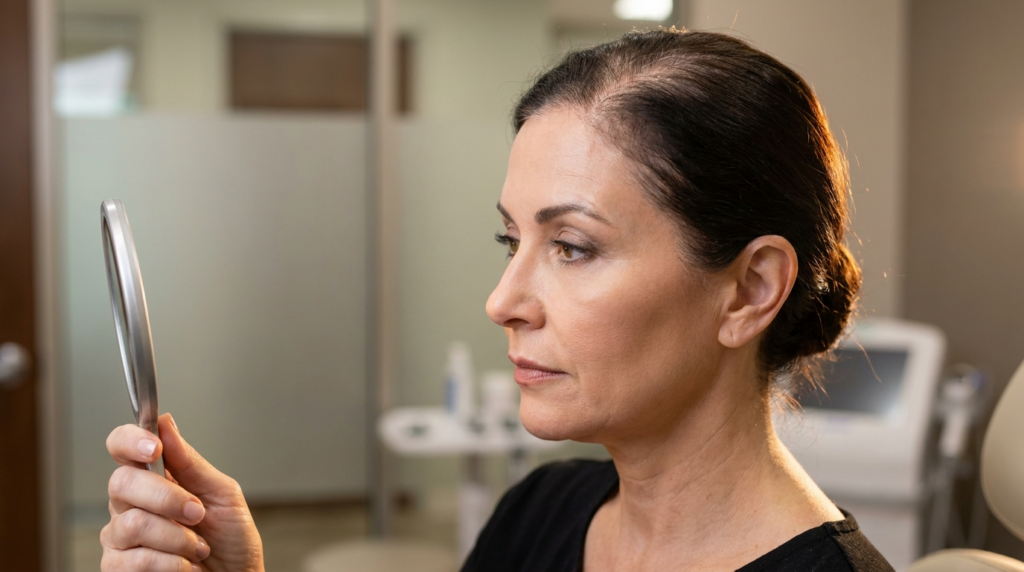
Most hair clinics treat female pattern hair loss as a secondary version of male baldness, yet the biological landscape of a woman’s scalp is fundamentally different. While men primarily struggle with DHT-driven follicular miniaturization, women navigate a complex interplay of hormonal fluctuations, androgen-independent pathways, and a fragile scalp microenvironment. If you have ever felt that generic hair treatments or “unisex” mesotherapy sessions yielded underwhelming results, you aren’t imagining things. The industry’s failure to distinguish between male and female biological triggers is the primary reason why standard therapies often fail to stop thinning in women.
This 2026 clinical guide dismantles the myth of gender-neutral hair restoration. By leveraging the latest research on dermal papilla senescence and hormonal modulation, we demonstrate why female pattern hair loss requires a precision-engineered protocol. Whether you are a dermatologist refining your practice or a patient seeking evidence-based restoration, this analysis provides the technical depth and actionable steps necessary to reverse thinning and restore follicular vitality through specialized mesotherapy interventions.
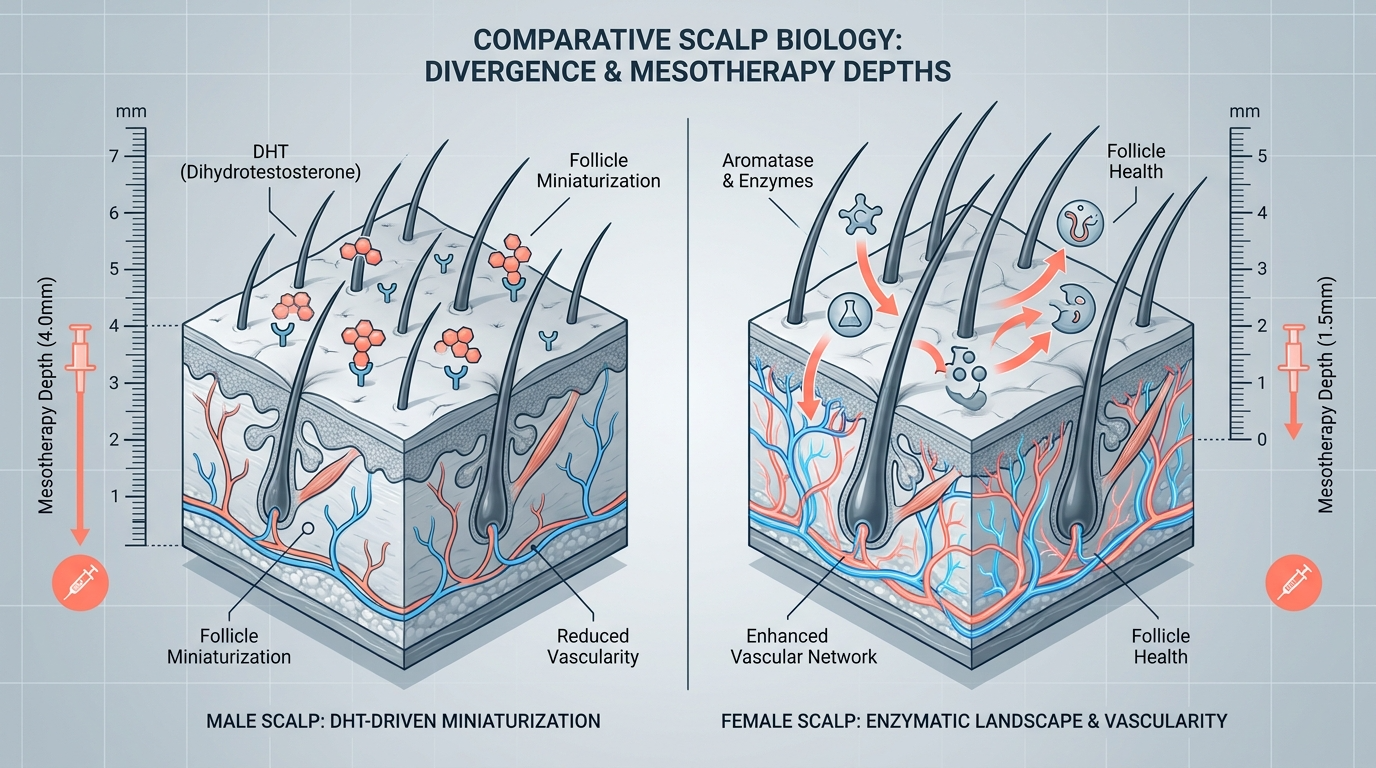
The Aromatase Factor: Why Female Pattern Hair Loss is Not Male Baldness
In the world of trichology, the focus has historically been on 5-alpha-reductase, the enzyme that converts testosterone into DHT. However, the female scalp possesses a secret weapon—and a unique vulnerability—known as aromatase. This enzyme converts androgens into estrogens, providing a natural buffer against hair loss. In female pattern hair loss, this buffer often erodes, but not in the way most expect. It is not just about the presence of “male hormones”; it is about the localized failure of the scalp’s protective enzymatic environment.
Recent studies in 2025 have shown that women with thinning hair often have significantly lower levels of aromatase in their frontal and parietal follicles compared to women with thick hair. This means that a “male” mesotherapy cocktail, which focuses solely on blocking DHT, ignores the estrogenic support system that female follicles depend on. A female-specific protocol must focus on bio-identical signals that mimic this protective environment rather than just applying a generic “anti-androgen” hammer to a problem that requires a “hormonal balancer” scalpel.
Decoding the Scalp Microenvironment: Dermal Papilla Senescence
The “microenvironment” of the scalp is essentially the soil in which the hair grows. In female pattern hair loss, the problem often lies in the “senescence” or aging of the dermal papilla cells. Unlike the aggressive scarring seen in some conditions, FPHL involves follicles that are essentially “falling asleep” due to oxidative stress and poor microcirculation. Standard mesotherapy often uses a shotgun approach, injecting basic vitamins into the dermis without addressing why those cells stopped responding to growth signals in the first place.
Critically, the depth of injection matters more in women than in men. Because female scalp skin is generally thinner, the target depth for mesotherapy must be calibrated to reach the follicular bulb without triggering excessive inflammatory responses. When the scalp microenvironment is neglected, the hair enters a permanent telogen (resting) phase. By introducing specific peptides and antioxidants through precision injections, we can effectively “re-wake” these cells, a process Dr. Ebru Okyay prioritizes in her Antalya clinic to ensure long-term follicular survival.
Comparison: Why Unisex Hair Loss Protocols Fail Women
The following comparison highlights the fundamental divergence between generic hair loss treatments and a female-centric clinical approach. Understanding these differences is the first step toward effective restoration.
| Biological Factor | Male Pattern Protocol | Female Pattern Protocol (2026) |
|---|---|---|
| Primary Target | DHT Blockade (5-alpha-reductase) | Aromatase Support & Estrogen Balance |
| Injection Depth | 2.0mm – 4.0mm (Deep Dermis) | 1.5mm – 2.5mm (Targeted Follicular Layer) |
| Key Ingredients | Finasteride/Dutasteride based | Peptides, Melatonin, Zinc, Growth Factors |
| Pathway Focus | Androgen Receptor Sensitivity | Androgen-Independent & Vascular Support |
| Treatment Frequency | Maintenance-heavy | Cyclical (Aligned with Hormonal Peaks) |
This data illustrates that applying a male-centric framework to a female scalp is not just inefficient—it is biologically mismatched. Effective treatment for female pattern hair loss must respect the unique vascularity and enzymatic profile of the female scalp.
Androgen-Independent Pathways: The Role of Stress and Inflammation
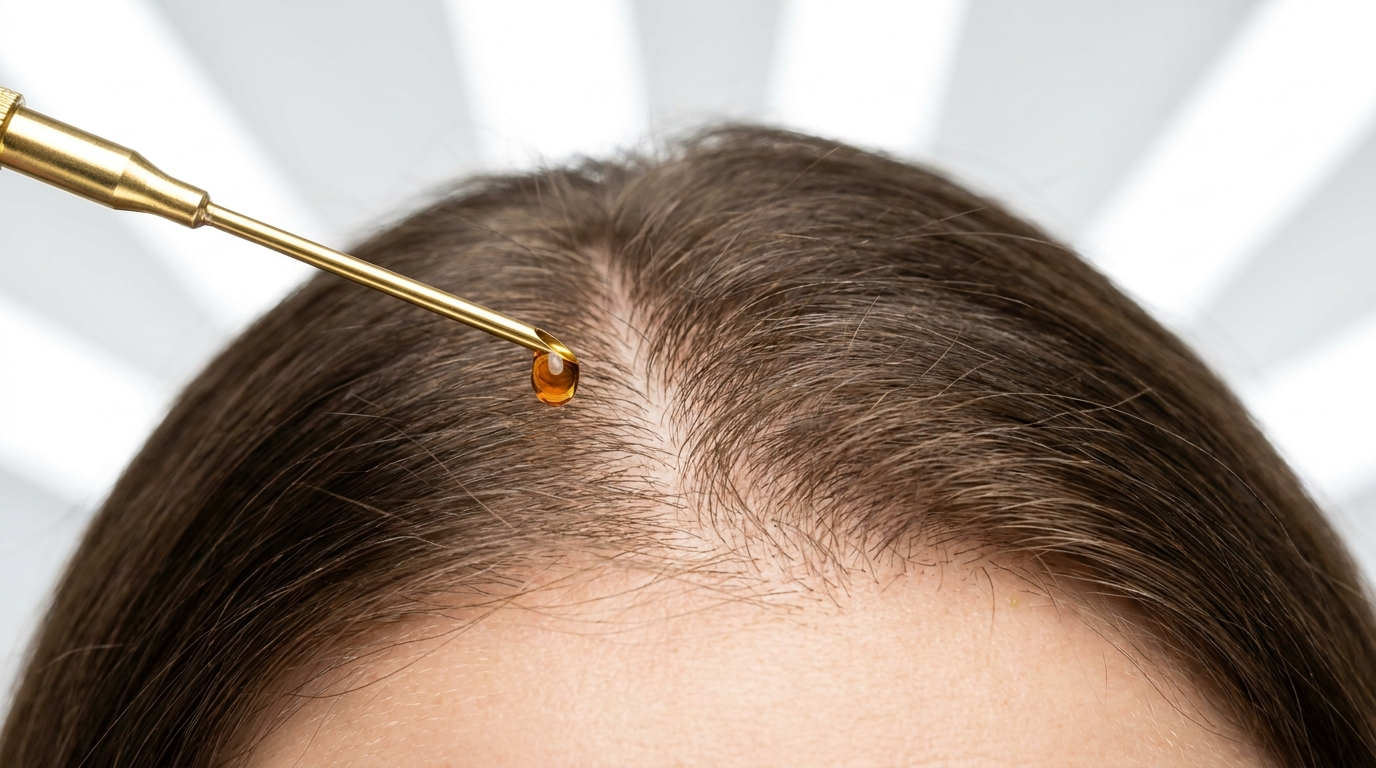
One of the most overlooked aspects of female pattern hair loss is the “androgen-independent” pathway. Many women suffer from thinning even when their testosterone and DHT levels are perfectly normal. This occurs because the hair follicles become hypersensitive to “substance P” (a neurotransmitter released during stress) and micro-inflammation. In these cases, traditional blockers do nothing because the trigger isn’t an androgen—it’s a neuro-inflammatory response.
A female-specific mesotherapy protocol integrates neuro-protective agents and anti-inflammatory compounds like biomimetic peptides. These molecules act as a “buffer” between the follicle and the body’s stress signals. By calming the scalp microenvironment, we create a sanctuary for the hair to regrow. This is particularly vital for women balancing high-stress careers or hormonal shifts, such as post-pregnancy or menopause, where the body’s inflammatory markers are naturally elevated.
The 2026 Protocol: Next-Generation Ingredients for Female Follicles
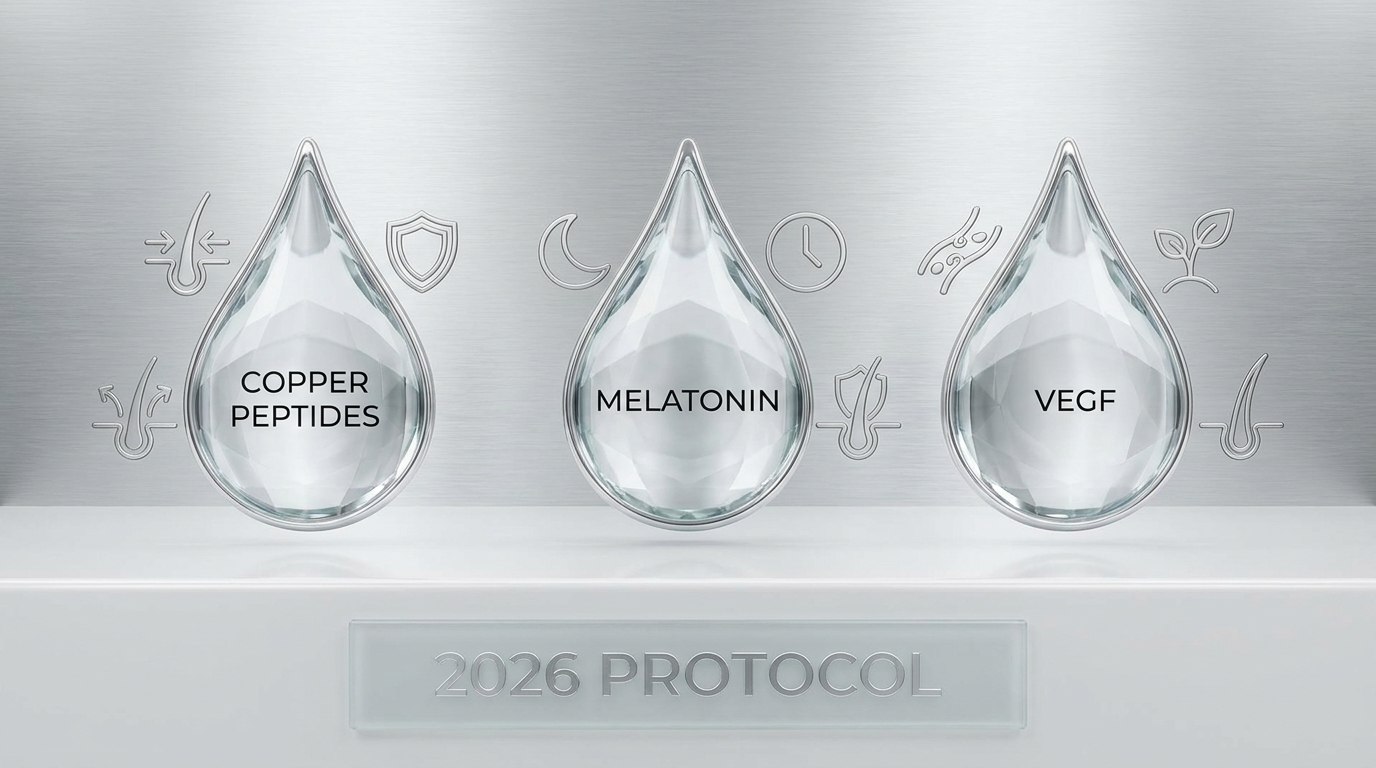
Moving beyond basic B-vitamins, the modern 2026 mesotherapy cocktail for women focuses on cellular signaling. These aren’t just “nutrients”; they are instructions for the follicle. Here are the core components that differentiate a high-tier female protocol:
- Copper Peptides: These increase follicle size and stimulate collagen production around the bulb, providing better structural support.
- Melatonin: A powerful topical antioxidant that has been shown to extend the anagen (growth) phase specifically in women.
- VEGF (Vascular Endothelial Growth Factor): Stimulates the formation of new blood vessels around thinning follicles, ensuring a steady supply of oxygen and nutrients.
- Biotin and Zinc: While traditional, their concentration in the 2026 protocol is optimized for synergy with growth factors.
By combining these with advanced anti-aging principles, we address the biological root causes of female pattern hair loss. This approach ensures that the new hair is not only more abundant but also thicker in diameter and more resilient to breakage.

Female Alopecia Staging: Precision Diagnosis Before Treatment
In women, hair loss usually manifests as a widening part line or general thinning at the crown (the Ludwig Scale), rather than the receding hairline typical of men. A precision protocol begins with advanced staging. Before any needle touches the scalp, a clinical evaluation of the “Female Alopecia Staging” is mandatory. This involves digital trichoscopy to measure hair density and follicular diversity.
At Dr. Ebru Okyay’s clinic, this diagnosis is paired with a review of hormonal baselines. Treating female pattern hair loss without checking iron levels, thyroid function, and estrogen-progesterone ratios is like trying to fix a car without looking under the hood. Only after these factors are mapped can a personalized mesotherapy plan be designed. This ensures that the treatment is not just reactive but curative.
The Clinical Journey: From Thinning to Restoration
Restoring hair is a marathon, not a sprint. The 2026 female-specific protocol follows a structured 5-step journey to ensure maximum follicular “buy-in” and long-term results.
- Stabilization Phase: The first 2-3 sessions focus on stopping active shedding by neutralizing scalp inflammation and oxidative stress.
- Revitalization Phase: Injections move toward nutrient-dense cocktails designed to “wake up” dormant follicles.
- Growth Surge Phase: Using high concentrations of growth factors to encourage the transition from telogen to anagen.
- Density Optimization: Focused treatments on the part line and crown to improve visual thickness.
- Preservation: A tailored home-care and maintenance schedule to protect the new growth from hormonal shifts.
Following this path ensures that every drop of mesotherapy serum is utilized by the scalp effectively. If you are ready to begin your journey, contact Dr. Ebru Okyay for a specialized consultation in Antalya.
Dr. Ebru Okyay: A Specialized Approach in Antalya
Choosing the right practitioner for hair restoration is critical. Dr. Ebru Okyay, a board-certified dermatologist, brings a unique perspective to female pattern hair loss. With a background from Cerrahpaşa Faculty of Medicine and years of clinical expertise, she recognizes that hair health is an extension of overall dermatological wellness. Her clinic in Antalya is not just a treatment center; it is a center of excellence where advanced medical science meets personalized care.
Dr. Okyay’s philosophy centers on “natural restoration.” She avoids over-promising and instead focuses on evidence-based results that harmonize with your body’s biology. For international patients visiting Antalya for medical tourism, her clinic offers a seamless experience, combining world-class dermatological procedures with a compassionate, patient-first approach. Whether you are dealing with chronic thinning or early-stage FPHL, her specialized protocols provide a path back to confidence.

Action Plan: 5 Steps to Reclaiming Your Hair Health
Managing female pattern hair loss requires proactive steps. Follow this guide to move from frustration to a clear restoration strategy:
- Assess: Use a high-resolution mirror or trichoscopy to identify if thinning is localized (part line) or diffuse.
- Test: Request a full hormonal and nutritional blood panel, focusing on Ferritin, Vitamin D, and Free Testosterone.
- Consult: Schedule a session with a dermatologist who specializes in female-specific protocols, not just “general” hair loss.
- Commit: Plan for a minimum of 4-6 sessions of mesotherapy to allow for the biological hair growth cycle to respond.
- Protect: Integrate scalp sun protection and gentle, sulfate-free shampoos into your daily routine.
By taking these steps, you ensure that your treatment for female pattern hair loss is built on a foundation of scientific rigor rather than guesswork.
Frequently Asked Questions (FAQs)
How is female pattern hair loss different from male baldness?
Female pattern hair loss typically involves diffuse thinning across the crown and a widening part line, whereas male baldness often presents as a receding hairline. Biologically, women have higher levels of the enzyme aromatase, which protects hair, meaning female treatments must focus on supporting these enzymatic pathways rather than just blocking DHT.
Does mesotherapy hurt for women with sensitive scalps?
Most patients describe the sensation as a series of tiny pinpricks. Since the female scalp is often thinner, our 2026 protocol uses ultra-fine needles and a shallower injection depth, making the procedure much more comfortable than traditional methods. Topical numbing creams can also be applied for those with higher sensitivity.
How many sessions of mesotherapy are needed for female pattern hair loss?
While some notice a reduction in shedding after the second session, visible regrowth and increased density usually require 4 to 6 sessions spaced two weeks apart. This timeline allows the follicles to transition through the resting phase and enter the active growth phase, supported by the injected growth factors.
Can I combine mesotherapy with other treatments?
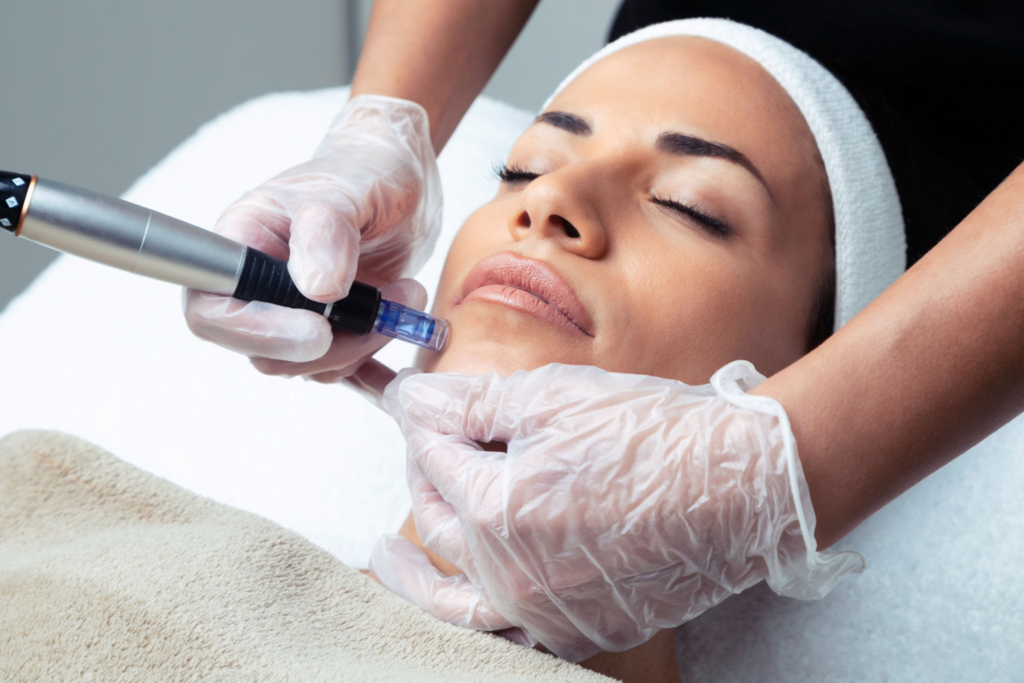
Absolutely. Mesotherapy is highly synergistic with treatments like PRP or Dermapen micro-needling. At our clinic, we often combine these to address both the internal nutrient supply and the external scalp circulation. However, it is essential to have a dermatologist coordinate these treatments to avoid over-stimulating the scalp.
Is female pattern hair loss permanent?
If caught in the early to mid-stages, thinning can often be reversed or significantly slowed. However, if the follicles have completely miniaturized and the scalp has become shiny and smooth, regrowth becomes much more difficult. This is why early intervention with specialized mesotherapy is critical for long-term hair preservation.
 English
  German
  French
  Spanish
  Italian
  Russian
  Arabic
  Turkish