
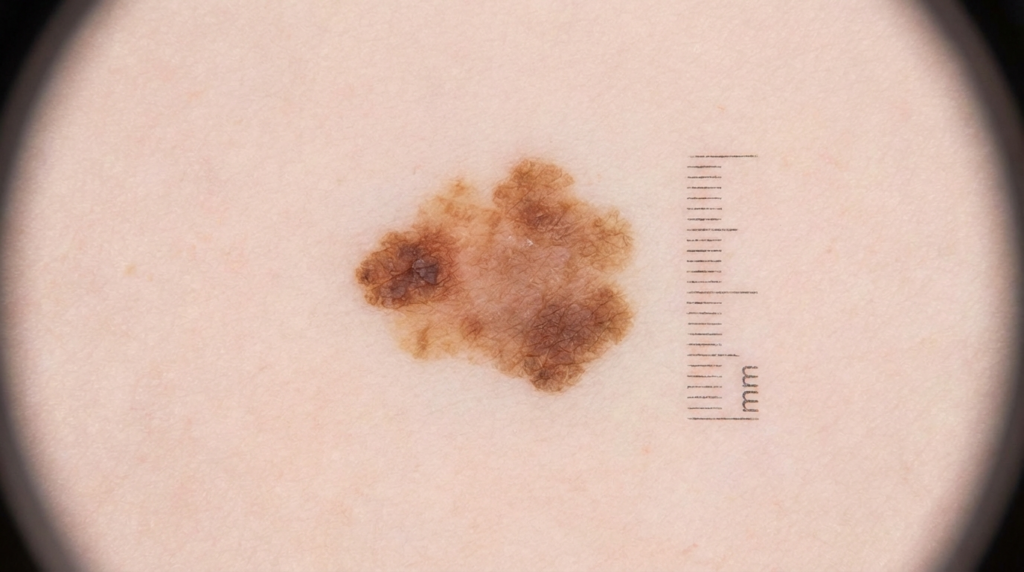
Skin cancer, a prevalent malignancy, demands vigilance. Early detection, indeed, proves life-saving. Dermatologists employ meticulous strategies to track moles, ensuring suspicious changes are identified promptly. This guide illuminates the critical steps involved, empowering you with knowledge for proactive skin health.
By 2026, advancements in dermatological screening offer refined methods, prioritizing early diagnosis without compromising thoroughness. Understanding these processes is crucial for safeguarding your well-being. This article details the essential techniques, ensuring you make informed decisions regarding your skin’s future.
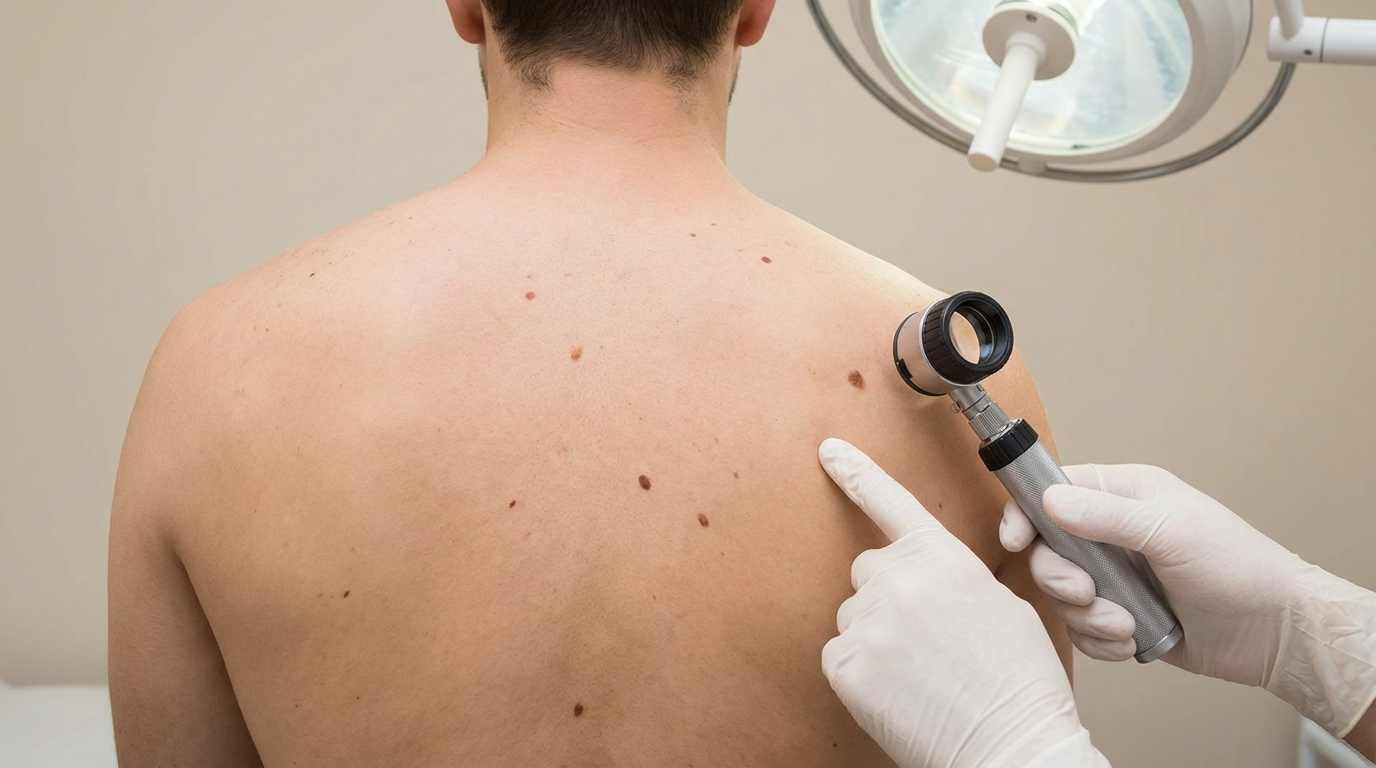
Why Early Detection of Skin Cancer Matters Immensely
Melanoma, the most dangerous form of skin cancer, often originates from existing moles or appears as new pigmented lesions. Its aggressive nature necessitates swift action. When caught early, melanoma’s cure rate soars significantly, often exceeding 98%. Delay, however, allows it to spread, complicating treatment and diminishing prognosis.
Regular skin cancer screening, therefore, stands as a cornerstone of preventive medicine. It is not merely a recommendation; it is a vital health imperative. Dermatologists possess the expertise to discern subtle changes, often imperceptible to the untrained eye, making professional examinations indispensable.
The Silent Threat: Understanding Melanoma’s Progression
Melanoma’s insidious progression often begins superficially, confined to the epidermis. This stage, known as in situ melanoma, offers the highest chance of complete eradication. As it deepens, invading the dermis, its capacity to metastasize—spread to other body parts—increases dramatically. Lymph nodes become vulnerable, then distant organs.
This journey from a benign-looking mole to a life-threatening malignancy underscores the urgency of consistent surveillance. Every suspicious lesion warrants immediate attention. Your dermatologo acts as your primary defense, identifying these critical shifts before they escalate.

The ABCDE Rule: Your First Line of Defense
Dermatologists universally employ the ABCDE rule, a mnemonic device for evaluating moles for potential melanoma. This simple yet powerful tool guides both self-examinations and professional screenings. Understanding each criterion empowers you to recognize warning signs.
This rule serves as a foundational framework, a critical checklist for assessing pigmented lesions. Any mole exhibiting one or more of these characteristics demands immediate professional evaluation. Hesitation, in this context, carries significant risk.
Deconstructing the ABCDE Criteria
- A – Asymmetry: A benign mole typically appears symmetrical; draw a line through it, and both halves should match. Melanoma, conversely, often presents with irregular, mismatched halves.
- B – Border Irregularity: Healthy moles possess smooth, well-defined borders. Suspicious lesions frequently exhibit notched, scalloped, or poorly demarcated edges.
- C – Color Variation: Uniform color characterizes most benign moles. Melanoma often displays multiple shades of brown, black, tan, red, white, or blue within a single lesion.
- D – Diameter: While not definitive, moles larger than 6 millimeters (about the size of a pencil eraser) warrant closer inspection. Melanomas often exceed this size, though smaller ones can occur.
- E – Evolving: Any change in a mole—size, shape, color, elevation, or new symptoms like itching, bleeding, or crusting—is the most critical warning sign. Evolution demands immediate medical review.
These criteria, when applied diligently, significantly enhance the chances of detecting melanoma at its earliest, most treatable stages. Regular self-checks, guided by the ABCDE rule, complement professional screenings effectively.
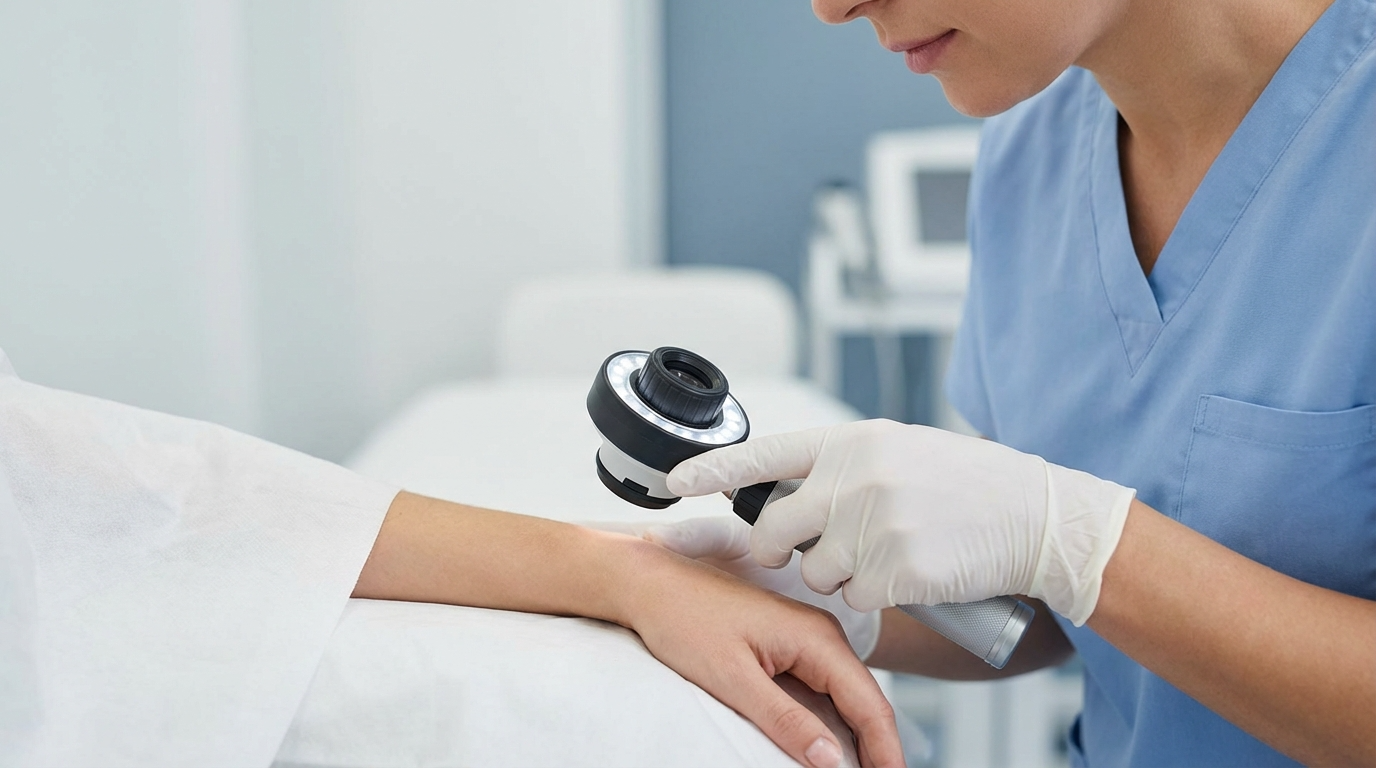
7 Essential Steps: How Dermatologists Track Moles
Dermatologists employ a systematic approach to mole tracking, combining visual inspection with advanced diagnostic tools. This comprehensive strategy ensures no suspicious lesion goes unnoticed. Each step plays a vital role in the early detection of skin cancer.
This methodical process, refined over years of clinical practice, offers the highest level of scrutiny. Trust in this expertise; it forms the bedrock of effective skin cancer surveillance. For a deeper understanding of dermatological care, visit our Chi siamo pagina.
The Dermatologist’s Comprehensive Screening Protocol
- 1. Detailed Patient History: Your dermatologist first gathers information on your personal and family history of skin cancer, sun exposure, and any previous atypical moles. This context is invaluable.
- 2. Full Body Skin Examination: A thorough visual inspection of your entire skin surface, from scalp to soles, is performed. This includes areas often overlooked, such as between toes and under nails.
- 3. Dermoscopy (Mole Mapping): Using a specialized handheld microscope, the dermatoscope, your dermatologist examines suspicious moles at high magnification. This reveals subsurface structures invisible to the naked eye, aiding in precise diagnosis.
- 4. Digital Photography & Surveillance: For individuals with numerous moles or atypical nevi, digital mole mapping captures baseline images. Subsequent visits allow for direct comparison, identifying new lesions or changes in existing ones with unparalleled accuracy.
- 5. Biopsy of Suspicious Lesions: If a mole exhibits concerning features, a biopsy is performed. A small tissue sample is removed and sent for histopathological examination, providing a definitive diagnosis.
- 6. Patient Education on Self-Examination: You receive guidance on how to perform regular self-skin checks, reinforcing the ABCDE rule and empowering you to be an active participant in your skin health.
- 7. Personalized Follow-Up Schedule: Based on your risk factors and findings, a tailored follow-up schedule is established. This ensures ongoing surveillance, crucial for high-risk individuals.
This multi-faceted approach maximizes the chances of early detection, offering peace of mind and timely intervention. Consistent engagement with your dermatologist is paramount. For more insights into maintaining healthy skin, explore our blog.
Beyond Screening: Proactive Skin Health Strategies
While professional mole tracking is indispensable, your daily habits significantly impact skin cancer risk. Sun protection, a cornerstone of dermatological advice, cannot be overstated. Limiting UV exposure directly reduces the likelihood of developing malignant lesions.
Adopting a comprehensive sun-safe lifestyle complements regular screenings. This dual approach offers the most robust defense against skin cancer. Your commitment to these practices forms a powerful partnership with your dermatologist.
Essential Sun Protection Practices
- Cerca Ombra: Especially between 10 AM and 4 PM, when UV radiation is strongest.
- Indossare indumenti protettivi: Long-sleeved shirts, pants, wide-brimmed hats, and UV-blocking sunglasses offer physical barriers.
- Apply Sunscreen Diligently: Use broad-spectrum sunscreen with an SPF of 30 or higher, reapplying every two hours, or more often if swimming or sweating.
- Evitare i lettini abbronzanti: These devices emit harmful UV radiation, significantly increasing skin cancer risk.
These simple yet effective measures drastically reduce your lifetime risk of skin cancer. Integrate them into your daily routine; your skin will thank you. Should you have concerns or wish to schedule a screening, please contact us.

Conclusione
Skin cancer screening, particularly through diligent mole tracking, stands as a critical defense against melanoma and other skin malignancies. Dermatologists, armed with the ABCDE rule and advanced diagnostic tools, offer an unparalleled level of protection. Your active participation, through self-examinations and sun-safe practices, completes this vital health strategy.
Prioritizing regular professional skin checks ensures early detection, dramatically improving outcomes. This proactive approach, indeed, saves lives. Discuss your skin health concerns with a qualified practitioner; it is an investment in your future well-being.

Punti chiave
- Early detection of skin cancer, especially melanoma, is paramount for successful treatment.
- Il Regola ABCDE (Asymmetry, Border, Color, Diameter, Evolving) guides both self-examination and professional assessment of moles.
- Dermatologists employ a 7-step comprehensive screening protocol, including dermoscopy and digital mole mapping.
- Regular self-skin checks, combined with professional screenings, form a robust defense.
- Proactive sun protection significantly reduces the risk of developing skin cancer.
Prossimi passi
- Schedule a full body skin examination with a qualified dermatologist, especially if you have risk factors.
- Perform monthly self-skin checks, familiarizing yourself with your moles and applying the ABCDE rule.
- Adopt rigorous sun protection habits to minimize UV exposure and reduce your skin cancer risk.
Domande frequenti (FAQ)
How often should I get a professional skin cancer screening?
The frequency depends on your individual risk factors. Generally, annual screenings are recommended, but high-risk individuals may require more frequent checks. Your dermatologist will advise you.
Can I perform mole tracking at home?
Yes, regular self-skin checks are encouraged. Use the ABCDE rule to monitor your moles for any changes. However, self-checks do not replace professional dermatological examinations.
What are the primary risk factors for skin cancer?
Key risk factors include excessive UV exposure (sunburns, tanning beds), fair skin, a history of numerous or atypical moles, and a family history of melanoma.
What happens if a dermatologist finds a suspicious mole?
If a mole appears suspicious, your dermatologist will likely perform a biopsy to remove a small tissue sample for laboratory analysis. This determines if the mole is benign or malignant.
Scopri l'esperienza della Dott.ssa Ebru Okyay, la tua dermatologa di fiducia ad Antalya. Che tu voglia risolvere problemi cutanei di natura medica o migliorare la tua bellezza naturale con trattamenti estetici, la Dott.ssa Okyay è qui per aiutarti. Con cure personalizzate e tecniche avanzate, raggiungere i tuoi obiettivi di bellezza non è mai stato così facile.
 Italian
  English
  German
  French
  Spanish
  Russian
  Arabic
  Turkish